Departments

Literacy Meets Creativity: Inaugural Summer Camp Inspires Young Learners with Art

Originally posted: Sep. 15, 2026

By: Sakinah Musa

I hate summer camp.

That was a camper’s first line during a poetry exercise on the first day of the inaugural Literacy with the Arts (LwtA) summer camp. The student had arrived determined not to enjoy the experience, and he was honest about it. Instead of pushing back, the instructors helped him transform his feelings into a haiku. And by the end of the three-day program, he had made friends, eagerly participated in different art activities, and was sad that the camp was over. 

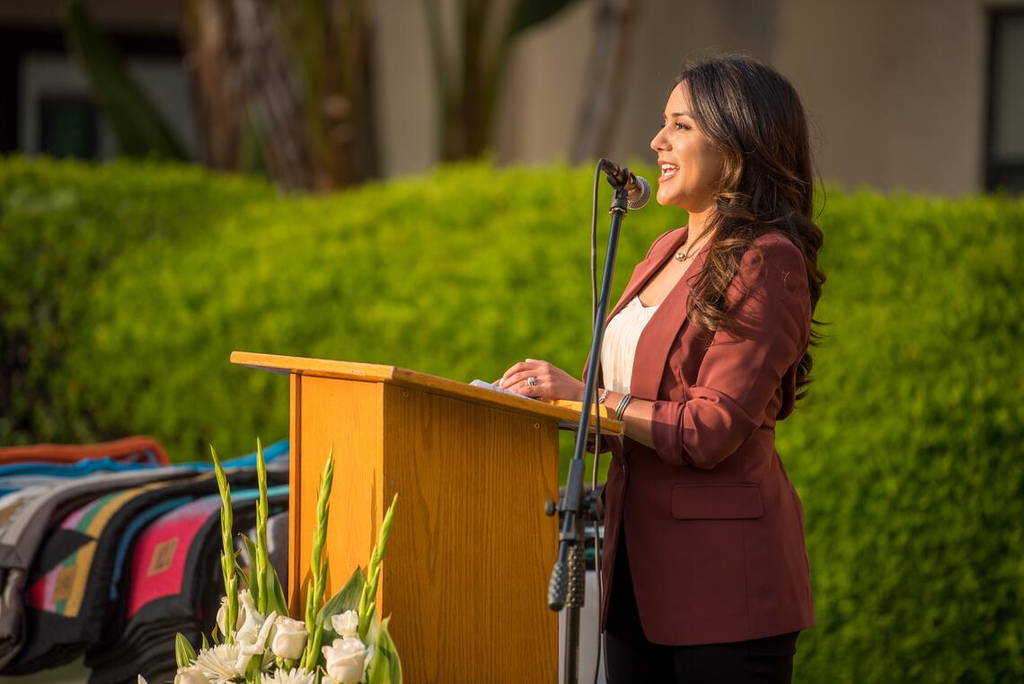
“That singular transformation captured the camp’s essence,” said Chad Scott, co-director and artist-in-residence at the Zeiter Literacy Development Center.

Sponsored by the center and UNLV Early Outreach, the camp welcomed 25 participants in grades 2-5 and provided them with hands-on literacy and arts instruction. 

The camp was developed by Chad and fellow Literacy faculty members Chyllis Scott and Danielle Rylak, who collaborated with local artists and poets. Instructional and operational support was also provided by Emerita faculty member Claire Tredwell, two literacy doctoral students, and one undergraduate student. 

From Conversations to Camp

The idea for the summer camp grew out of a series of conversations. The Early Outreach program sought meaningful ways to engage more elementary-aged students through summer camp opportunities, while the college faculty members were exploring ways to extend literacy and art activities beyond traditional classroom approaches.

According to Chyllis, hands-on experiences with literacy and arts integration support students’  information retention and engagement. 

Beyond Reading

Unlike traditional literacy camps that focus solely on reading and writing skills, this camp challenged young learners to view books as a gateway to creativity.

With assistance from Amanda Melilli, head of the Teachers Development Resources Library, the team curated an extensive collection of books and developed lessons centered on artists whose work connects poetry and visual art. Titles such as Beautiful Oops by Barney Saltzberg reinforce themes of self-expression and encourage the children to see mistakes as opportunities to create.

By combining literacy and art, the campers discovered new ways to communicate, express themselves, and connect.

On the first day, the campers read about the life and works of renowned artist Jean-Michel Basquiat. Then, they translated their learning into clay dinosaur sculptures, poems, and journal entries under the guidance of local poet Heather Lang-Cassera. 

The next day, they learned about environmental awareness and public art through readings and activities that engaged with the work of artist Keith Haring, before participating in a painting class led by muralist Pretty Done. 

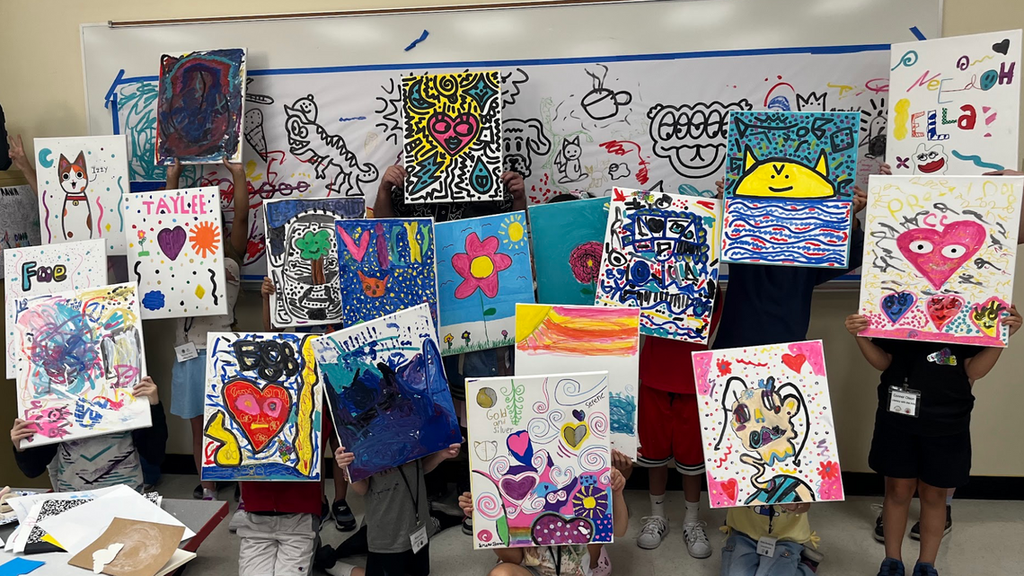
On the final day, the campers explored the life of artist Yayoi Kusama with a read-aloud. They also participated in an acrylic pour painting lesson led by Vogue Robinson and Brittni the Creative, who demonstrated techniques before the campers transformed their artwork into original writing. 

For the artists, the partnership was rewarding and inspiring.

“The experience reinforced my belief that curiosity, play, and imagination can spark learning, growth, and connection at every age,” Heather Lang-Cassera said.

Student Collaboration

Doctoral students Cherish Olson and Kelly Byrd, and undergraduate student Allison Gonzalez, worked closely with faculty members to plan, teach, and support learning activities. 

Their participation not only equips them for their future educational careers but also lays the groundwork for co-authorship opportunities as the team hopes to contribute to the growing body of research and scholarship in arts integration, including a future graduate certificate program in arts integration. 

Until Next Summer

For the team, watching the campers grow more confident and engaged was the highlight of the camp. Following a successful first iteration, they plan to establish it as a summer tradition. 

Future camps may extend beyond three days and include a final showcase where parents can view the artwork and writing their children created throughout the week. The team is also considering a broader STEAM model that integrates the arts with science, technology, engineering, and mathematics, and expanding opportunities for more UNLV students to be involved in the summer camp experience.

Until then, they hope that they have helped the children see themselves not just as learners, but as storytellers, artists, and creators.
Getting Involved Enriches Student Experiences and Outcomes

Originally posted: Aug. 31, 2026

By: COE Communications Staff

Chelsie Hawkinson, the College of Education’s faculty fellow for student success and engagement, sat down with the college’s CSUN Representative Melvin Taylor to record a conversation about why student involvement matters. It’s a 12-minute listen with great advice for students of all ages and stages of their higher education journeys. Rather read? Here’s the transcript.

Undergraduate and graduate students to join Rebel Educators: Make It Make Sense, a virtual, student-centered conversation where you can respond to what you heard, share your own experience, and help shape what comes next. The online session will be on Wednesday, Apr. 22 from 5:30-6:30 p.m.

In this conversation, you will have the opportunity to:

  • React to the conversation and share your perspective
  • Speak up about what you would like to see from student organizations
  • Learn about current active student organizations in the College of Education
  • Help shape future opportunities, leadership roles, and engagement efforts

Your input will directly inform planning for Fall 2026-Spring 2027. 

Whether you are already involved or just starting to explore, your perspective is important. You do not need to have everything figured out to participate.

If you are interested, please register to attend and receive the Zoom Link.

Alumni Spotlight: Hazel Alejandro ‘25

Originally posted: Aug. 28, 2026

By: COE Communications Staff

Name: Hazel Alejandro 

Degree: ‘25 M.Ed. Higher Education 

Current Employer: CSN

Why is it important to give back? 

I think it’s so important to give back to the community that nourished me so much. I didn’t expect to love my grad program so much, or miss it as much, so I just wanted to get back in there and definitely speak to all the professors I had. Also, to thank people who have taken what they’ve learned in UNLV’s program and just soared with it. 

What was a fun or unique class you took at UNLV? 

Future issues in higher education, with Dr. Doris Watson. It made me aware of current issues in higher education, like the closing down of institutions all over America or the rise of contingent faculty, as opposed to tenured faculty. Instead of making me feel pessimistic, it made me feel optimistic and ready to tackle these issues and ready to be here for my students. 

What is something you think people should know about you?

I like having a random hobby every season to avoid the void of life. Last year, I was really into grilling. Before that, I was really into camping, hiking, and photography. I have had a lot of fun hobbies. I like learning new things. 3D printing is going to be my next hobby. 

Are you a COE alum? Let us know what you’ve got going on by submitting a Class Note or getting involved!

New Multilingual Education Programs Launching in Fall 2026

Originally posted: Aug. 18, 2026

By: COE Communications Staff

Undergraduate ELAD Certificate

Undergraduate students can earn a new certificate in English Language Acquisition and Development (ELAD). The 12-credit program puts students on track to obtain the endorsement Nevada requires for educators to teach English learners effectively. Students can earn the certificate while completing their elementary, secondary, or special education teaching degrees. In addition, students with a bachelor’s degree in a teaching field can also earn the certificate.

Master’s program renamed, plus a new bilingual education subplan

The master’s degree in English language learning has been renamed to the M.Ed. in Multilingual Education. Students enrolled in the program under the previous name are automatically transferred into the program under its new name.

The renamed M.Ed. in Multilingual Education now includes a bilingual education subplan, which helps educators earn eligibility to teach in dual language programs through the state’s bilingual endorsement. This subplan is also designed to enable students to obtain the ELAD endorsement simultaneously. The primary aim of this subplan is to build a larger pool of endorsed educators to support the statewide expansion of dual language programming.

PhD in Multilingual Education

Five students are enrolled in our new Ph.D. in Multilingual Education program. We expect to begin recruiting for fall 2027 admission during the spring semester.

Alumni Spotlight: Lilly Sifuentes ‘99

Originally posted: Aug. 14, 2026

By: COE Communications Staff

Name: Lilly Sifuentes 

Degrees: ‘99 B.S.Ed. Special Education 

Current Employer: Clark County School District | Veterans Tribute Career & Technical Academy
 

What led you to pursue a degree in education? 

My son was born with learning disabilities, which inspired me to pursue a career dedicated to supporting students with similar challenges. That personal experience fueled my passion for helping all students succeed. 

What are you most proud of from your UNLV experience? 

I am most proud of my perseverance and commitment to completing my degree while balancing family and professional responsibilities. That journey strengthened my dedication to education and service. UNLV was smaller in 1999, but it had all the resources I needed to learn and build a solid community. 

Why should alumni stay engaged at UNLV?  

There is great reward in watching future generations of Rebels achieve their academic goals. Staying engaged allows alumni to give back, inspire, and support students on their journeys. UNLV has grown into a large, diverse university with many programs and opportunities for students to explore and to succeed.


Are you a COE alum? Let us know what you’ve got going on by submitting a Class Note or getting involved!

Of Courage and Purpose

Originally posted: Aug. 11, 2026

By: Sakinah Musa

Of Courage and Purpose: How Kimberly Reed is Forging Her Trail

Kimberly Reed, ’04 M.Ed. Curriculum and Instruction, loves a challenge.

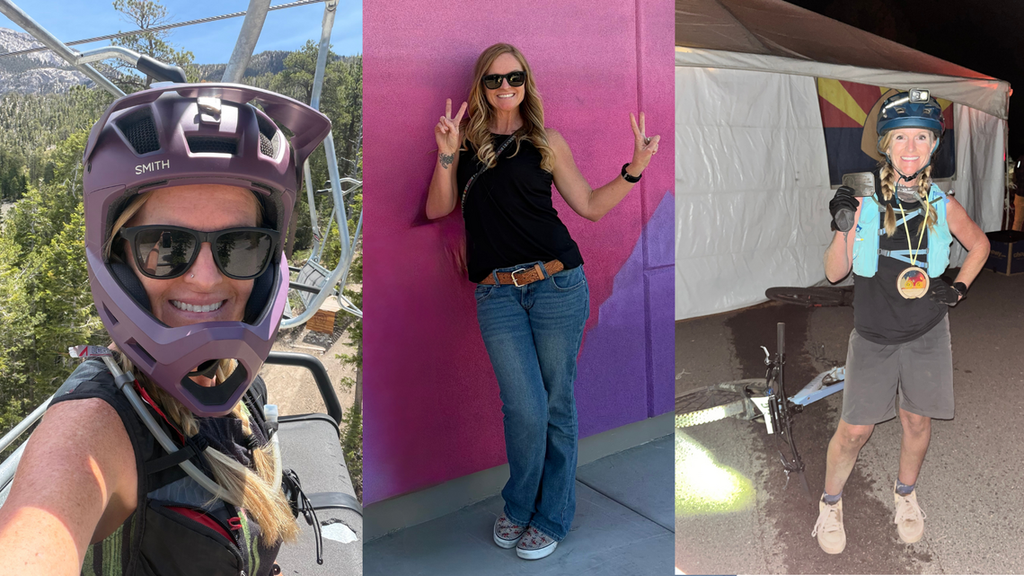
When she’s not teaching five AP classes at Pinecrest Academy Sloan Canyon, advising seniors, or coordinating student clubs, she runs competitively and mountain bikes.

That’s not all. 

She is also pursuing her doctoral degree, managing a fitness coaching business, and parenting two children. 

Kim’s journey came with struggles, but it is anchored in her resolve to live a life of courage and purpose. 

Choosing a Direction

Although her mother, also a UNLV alumna, had been a teacher since 4th grade, Kim wanted to take a different path. She earned her undergraduate degree in anthropology at UNLV in 2000 and worked as an archaeologist at the Desert Research Institute. 

“It was interesting, but I was often away from home and spending hours in an office with very little human connection.”

In search of a more stable and interactive career, Kim turned to substitute teaching. Right away, she realised she wanted to be a high school teacher, and 25 years later, she is still on track. 

Becoming Coach Kim

A tragic loss left her scared and anxious for years. She put her running shoes on and hit the road, hoping to find some peace and a path forward. 

Her sister, Amy-Mathis Leonard, ‘10 ‘26, UNLV Gateway Senior Math Placement and Support Programs coordinator and two-time alum, issued a new challenge to Kim–trail running, where she took on more risk and unknown terrains. The adrenaline rush was worth it.

“Running through the desert was exactly where I belonged,” Kim shared.

Over time, trail running strengthened her physically and mentally, rebuilding her sense of discipline and desire to connect.

“I wanted to help people change their lives through outdoor exercise,” she said. 

So she started a fitness and wellness coaching business. 

Taking a Detour

After a severe knee injury, Kim chose to challenge herself by using strength training and nutrition to recover rather than undergo invasive surgery. This path took her away from one of the things she loved most about her life–community. So, instead of high-impact trail running, she saddled up and hit the trails on a mountain bike.

Now, she is training for her second 100-mile mountain bike race, and her mantra through it all is “do things and the things get done.” A philosophy she instills in her students and coaching clients.

What Lies Ahead

Today, Kim is pursuing a doctoral degree in educational psychology with an emphasis on kinesiology and health psychology. Her research interests combine her passions: how outdoor exercise affects teachers’ ability to manage stress and, in turn, student engagement. She hopes that the degree will equip her with the credibility to speak and write as an expert. 

“I want people to have science-backed information on how to transform their lives for the better,” Kim said. 

One thing is certain, though: Kim’s legacy will be living life without fear.

Alumni Spotlight: Alex Templeton ‘05 ‘09

Originally posted: Jul. 31, 2026

By: COE Communications Staff

Name: Alex Templeton

Degrees: ‘05 B.A.Ed. Secondary Education (Social Science), ‘09 M.Ed. Educational Leadership 

Current Employer: State of California, Employment Development Department
 

How did UNLV prepare you for your career? 

I got involved with student government, and that experience helped build my confidence and leadership. It helped me understand that I can be a teacher and researcher, or a civil guiding leader. It gave me a lot of good groundwork and the foundations for leading by example for my students. 

What are you most proud of from your UNLV experience? 

I’m very proud that I was recognized as a leader in the Latino student community.
I made it a point to help with one of the first Latino convocation program ceremonies. I went and lobbied the student government. I was involved in the multicultural ethics student group. I felt like that was a big deal for future generations. 

What was your favorite activity that you participated in and why? 

We used to do a Chicana poetry night, and it involved a variety show, like music and poetry night. I would play instruments, do spoken word, and recite some of the songs I wrote that helped me get through an earlier part of my life. That was so much fun because it really built a fun and safe space. 


Are you a COE alum? Let us know what you’ve got going on by submitting a Class Note or getting involved!

Doctoral-Level Graduate Assistantship Opportunity

Originally posted: Jul. 29, 2026

By: COE Communications Staff

UNLV CREA is recruiting a doctoral graduate assistant to work on an IES-funded study on Nevada’s school funding system. The study will use a mixed-methods design to examine how Nevada’s school funding reforms have affected school expenditures, student achievement, and student progression. We will also survey and interview state, district, and school administrators to understand how the funding plan has been implemented across Nevada. The project is a partnership with the Nevada Department of Education.

Graduate assistants may contribute to activities such as:

  • Cleaning and analyzing longitudinal student and school data
  • Conducting descriptive and quasi-experimental analyses
  • Developing and administering surveys
  • Recruiting and interviewing education administrators
  • Transcribing, coding, and analyzing qualitative data
  • Reviewing legislative and policy documents
  • Conducting literature reviews
  • Preparing reports, presentations, policy briefs, and scholarly manuscripts

Applicants do not need experience in every area. However, strong candidates will have an interest in education policy, school finance, or program evaluation. Experience with Stata or another statistical program, Qualtrics, and qualitative coding would be helpful.

The position will be for the Fall 2026 and Spring 2027 semesters with an opportunity for renewal. Interested students should send Dr. Marianno (brad.marianno@unlv.edu) the following:

1. A current résumé or curriculum vitae

2. A brief statement describing their research interests, relevant experience, and reasons for wanting to join the project

3. Their expected graduation date and availability during the academic year and summer

Finding Connection Across Cultures: Ionel Vazquez-Ramos’ Teaching Journey in Chile

Originally posted: Jul. 28, 2026

By: COE Communications Staff

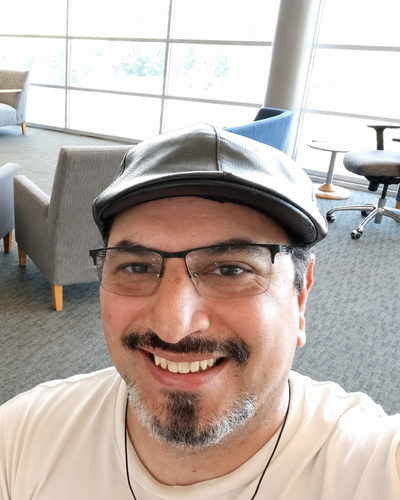
Ionel Vazquez-Ramos thought he understood bilingual education. As a future teacher and a fluent Spanish speaker, he knew the

importance of teaching in more than one language. But after spending two weeks co-teaching in a Chilean classroom, he discovered that bilingual education is about far more than language. It’s about understanding culture, building relationships, and helping every student feel seen. 

That realization became the biggest takeaway for Ionel as he participated in the college’s Teach in Chile program, an immersive international experience that pairs future educators with Chilean teachers to learn from each other.

A Vision for Bilingual Education

Currently an instructional assistant at his former high school, Southeast Career and Technical Academy, Ionel has long dreamed of creating a bilingual inclusion program of his own. When he learned about the opportunity to teach in Chile, he immediately saw a chance to better understand what bilingual education can look like in a culture where Spanish is the primary language. 

“It’s one thing hearing about the bilingual classes here, but it’s another thing actually living it in a whole different country that is native to that language,” Ionel said. “A bilingual classroom should really be adapted to both cultures that you’re trying to portray.” 

Learning Side by Side

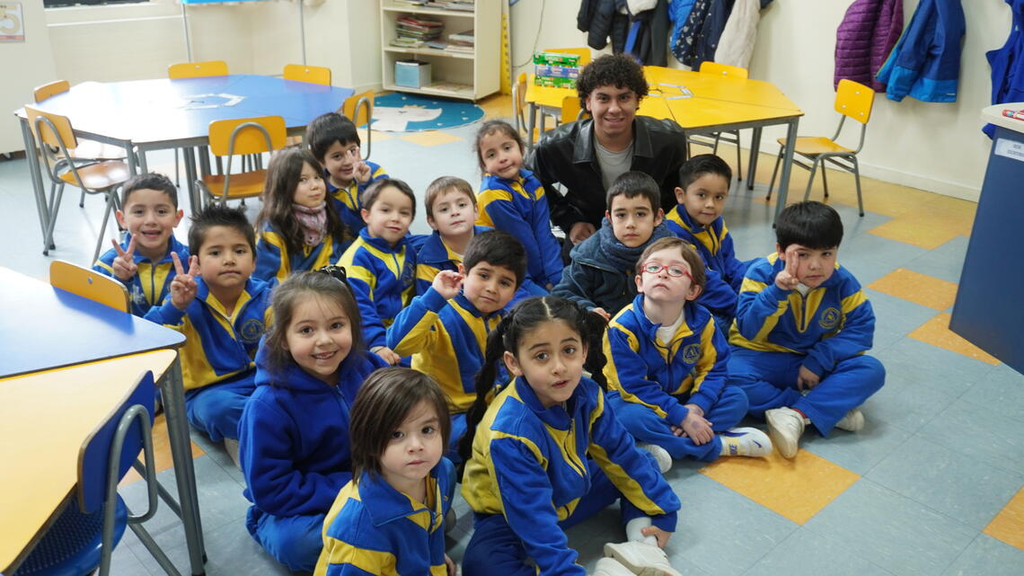
During his time in Chile, Ionel co-taught alongside a Chilean educator in a kindergarten classroom, observing lessons, sharing teaching strategies, and leading activities with students. 

“From the first day, there were nonstop questions about how my life was here, how the classroom worked here, and we kind of just started to bounce ideas back and forth,” he said. “It was honestly a very welcoming, loving, and caring community.” 

The collaboration became a true exchange of ideas. Ionel shared lesson plans and activities from his classroom in Las Vegas while his mentor teacher introduced him to Chilean teaching practices and classroom routines. 

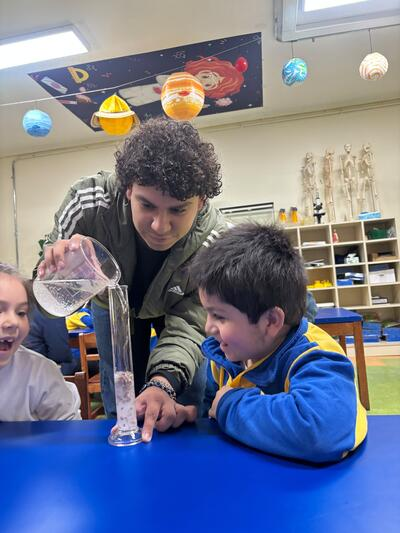
During the first week, Ionel focused on observing how students learned and how teachers built relationships with them. By the second week, he began leading lessons of his own, including a science activity inspired by an experiment he had done back home. 

“[My mentor teacher] was always willing to teach me how they did their stuff, their attention grabbers,” Ionel said. “I learned a lot from her and she learned a lot from me.” 

Lessons Beyond the Lesson Plan

Rather than focusing solely on instructional strategies, Ionel found himself paying close attention to the way his mentor teacher connected with students. He admired her ability to make learning engaging through storytelling, creativity, and play. 

“The energy she has when reading a story — even I had to catch myself because I was so into it.The voice changes, the tones, the faces, the surprises… It captivated everyone.” 

Watching his mentor teacher interact with students also prompted Ionel to reflect on his own classroom presence.

“I see myself as a very strict educator,” he said. “But she showed me that sometimes you just have to relax and enjoy the small moments, the smiles, and the fun.” 

Ionel also noticed cultural differences in how students expressed connection and care. In Chile, he saw students frequently show affection through hugs, physical closeness, and personal interactions — something that helped him reflect on the ways classrooms can create a sense of belonging.”

“They want to feel seen, they want to feel heard,” he said. “That’s how they show love.” 

Bringing Chile Home

Beyond the classroom, Ionel immersed himself in Chilean culture, exploring local communities, spending time with his host family, and learning about daily life. The experience reinforced for him that teaching requires a lifelong curiosity. 

“It changed my mindset that you should never stop learning, and that as an educator, you’ll never stop growing,” he said. 

The experience also reinforced his decision to make education his career. Before traveling to Chile, he expected to focus mostly on learning from another teacher. Instead, he found himself building meaningful relationships with students.

“I needed this experience to refresh my mind on my reason why I want to be an educator,” he said. “Those little moments are what matters most.”  

Looking ahead, Ionel hopes to bring pieces of Chile back to his future classroom — from teaching strategies and curriculum ideas to stories and cultural traditions.

For Ionel, teaching in Chile was more than an international experience. It was a reminder that great teaching is built through connection, collaboration, and a willingness to learn from others.

The UNLV Teach in Chile program is offered every summer.

How Elena Nourrie is Supporting LA’s Indigenous Communities

Originally posted: Jul. 21, 2026

By: Sakinah Musa

What did you do during the pandemic?

Many of us switched to remote learning and work, and others found new hobbies and made TikTok videos. We tried to stay engaged and connected with others, but also experienced isolation and loneliness. Amidst the uncertainty, Elena Nourrie, ‘17 M.Ed. Higher Education, and two longtime friends, decided to bring their community together. They organized virtual beading circles, wellness gatherings, and community conversations for members of their Indigenous communities.

This grassroots initiative shaped what is now known as the So’oh-Shinálí Sister Project (SSSP). The non-profit organization strengthens Indigenous communities across Los Angeles County through advocacy, wellness initiatives, cultural programming, and community-building efforts.

But Elena’s path to community leadership and advocacy began years earlier. 

Finding Her Place

Elena started out as an English major working in K-12 education. She began her professional career as an education guidance counselor for a Southern California tribe. There, she helped Native American youth navigate higher education pathways and witnessed their struggles to access resources

After five years in, she decided it was time to pursue an advanced degree in higher education. However, before choosing UNLV, Elena doubted that she would fit in as an Indigenous student. 

A meeting with Doris Watson, a professor of higher education, would change everything.

“When I told her I was Hopi, she immediately knew about my tribe, and she had worked with Hopi schools,” Elena recalled. “I was shocked that she knew where my family was from.” 

That interaction reassured Elena that UNLV was a place she belonged.  

“I didn’t think I could do a full-on master’s program. The impostor syndrome was real,” Elena shared. 

Doris encouraged Elena to recognize her potential, and she embarked on her master’s program with her mentor’s support. 

Belonging Through Community

Elena was not alone in her desire for connection with other Indigenous students. In addition to connections through Native student organizations, she supported the establishment of the UNLV Native American Students Association (NASA), where she met other community members from different tribes. 

As a result, she didn’t have to choose academic success over her cultural identity. She made a space where she could have both.

“In higher education, we’re often taught that success is singular, but in Indigenous communities, culture and community are our anchors,” Elena said. 

Advocacy In Action

Conversations about diversity and inclusion were abundant at UNLV. However, much of the discussion overlooked Indigenous communities.

“It validated for me that this work was necessary and that we needed stronger representation and visibility,” she explained. 

This led her to co-found the SSSP. Their programs focus on early childhood, Indigenous wellness, and advocacy, and strengthen connections across Native communities in Los Angeles County. One such program was a three-part wellness series on honoring Indigenous health. Through interactive workshops, cooking classes, cultural activities, and wellness discussions, Indigenous community members were educated on type 2 diabetes prevention and chronic disease management. 

Projects like this demonstrate how Elena applies lessons from her graduate program in policy, advocacy, and visibility in creating meaningful, community-centered initiatives. 

Despite challenges including stereotypes, misunderstandings, and systemic underinvestment in Indigenous communities, Elena remains committed to creating opportunities for future generations through cultural continuity with the wisdom of elders and a profound sense of belonging to one’s people, history, and land.