Departments

Benita Brooks Named Incoming Teaching & Learning Department Chair

Originally posted: May. 15, 2025

By: COE Communications Staff

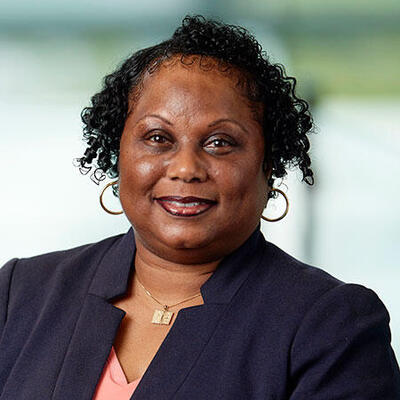
We are pleased to announce that Benita Brooks has been approved as the incoming chair of the Department of Teaching & Learning, effective July 1, 2025.

Dr. Brooks has served as faculty chair over the past year and is a tenured associate professor in literacy education. Prior to joining UNLV, she served as assistant dean for diversity, equity, and inclusion and as a tenured faculty member at Sam Houston State University, where she also directed the AACTE Holmes Scholars Program. Her leadership is deeply informed by her earlier career as a secondary English/language arts teacher in Nevada, California, and Texas.

We thank PG Schrader for his seven years of leadership. During his tenure,  T&L has undergone thoughtful infrastructure and bylaws transitions, and has expanded its enrollment, research capacity, and community engagement-with a focused commitment to student success and increasing higher education access for aspiring and advanced educators.

Saturday STEM Students Win Presidential AI Challenge

Originally posted: Apr. 7, 2026

By: Nancy Weaver

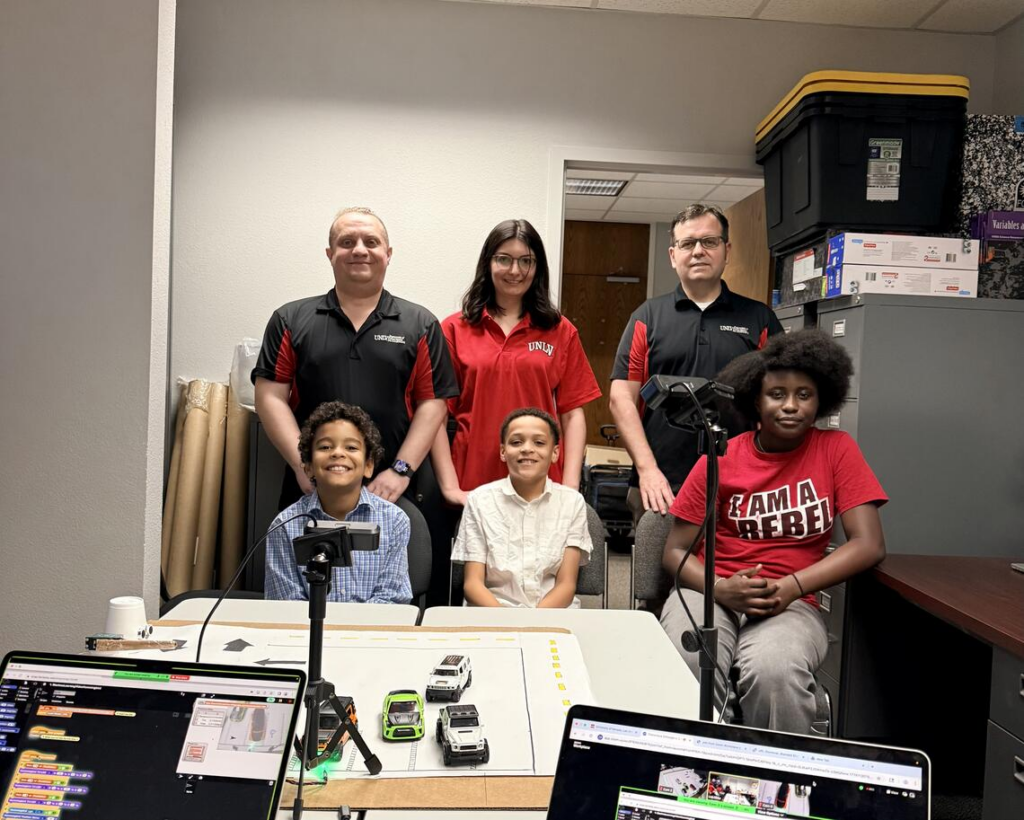
A team of elementary school students who participated in the UNLV Saturday STEM Program last fall won the statewide Elementary Category Track II (Technical/Implementation) division in the Presidential AI Challenge. 

This achievement highlights the impact of early exposure to STEM and AI education. Structured mentorship and hands-on learning empowers young students to innovate and succeed. The Saturday STEM Program, administered by the Center for Mathematics, Science, and Engineering Education (CMSEE), continues to foster the next generation of scientists, engineers, and problem-solvers through engaging, real-world learning experiences.

The Winning Project

Elementary school students Vasili Moseley, Tasheni Kamanga, and Joshua Scott developed a smart parking system using AI and sensor-based technologies to detect incorrect parking and improve overall parking efficiency. 

The project originated in a six-week “Integrating Engineering, Robotics, and AI for STEM Learning” class, which focused on emerging technologies through hands-on, project-based experiences. Students learned computer science concepts and artificial intelligence strategies through hands-on experience with sensors, microcontrollers, and LEDs. Following the course, students were invited to a four-week workshop offering structured mentorship and support to develop their competition projects.

Their project was selected from more than 2,500 submissions nationwide, earning recognition as one of only 328 state-level winners.The team has since advanced to the regional competition, where they presented to a panel of judges, competing alongside other state champions. Results from the next stage of the competition are pending.

Learning behind the Learning

The course, taught by CMSEE center director Hasan Deniz, and students Dilara Kara-Zorluoglu, and Metehan Zorluoglu, was developed through a collaborative National Science Foundation grant, “Cultivating Artificial Intelligence Literacy through Linguistically Inclusive Integrated Elementary Curriculum via Educational Robotics.” Drniz is the primary investigator and Erdogan Kaya (University of Texas at Arlington),  Ezgi Yesilyurt (Utah State University), and Refika Turgut (University of South Carolina Upstate) were co-PIs.

Alumni Spotlight: Christopher Dayley ’09

Originally posted: Apr. 29, 2025

By: COE Communications Staff

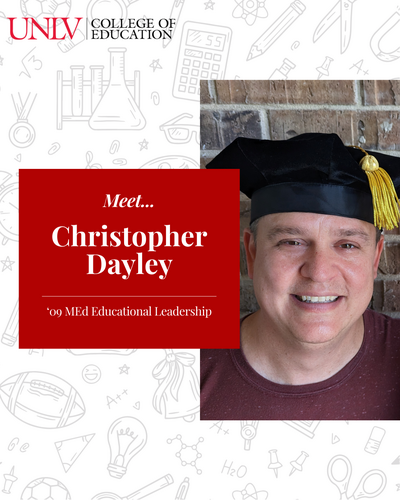
Name: Christopher Dayley 

Degree: M.Ed. Educational Leadership 

Current Role: Assistant Professor and Director of the Master of Arts in Technical Communication (MATC) at Texas State University 

What are some key aspects of campus culture that helped prepare you for the professional world?

Being involved in various campus activities exposed me to diverse perspectives and ideas. UNLV was a place where I could learn from people of all backgrounds. The sense of community and collaboration prepared me to be adaptable and understanding in my professional life.

What are the most sought after skills in your field right now?

Critical thinking, research skills, and the ability to communicate effectively are essential. The field of technical communication also demands an understanding of rhetoric and the ability to analyze how language influences thought and behavior. Cultural competence and an awareness of social justice issues are increasingly important.

Tell usabout you as a person!

I play in two local community bands—a polka band and a traditional community band. One of the highlights was touring Germany with them. My wife, a UNLV alum, and I have four kids. Our oldest daughter is currently a theater major at UNLV, and it’s been amazing to see her carry on the tradition.

Alumni Spotlight: Safiyya Bintali ‘24

Originally posted: Apr. 23, 2026

By: COE Communications Staff

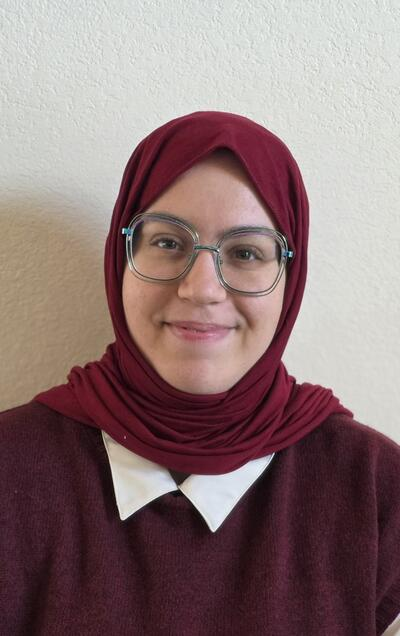
Name: Safiyya Bintali 

Degree: ‘24 B.S.Ed. Secondary Ed

Current Employer: Multiple 

Did you have a favorite or secret study spot when you were a student? 

In the Carlson Education Building; I always used to go to the third floor because not many people went there, since it’s all faculty offices. There was also a little table on the second floor at the end, and no one was ever there. Those were my favorite spots, because they’re so quiet, and I could focus. 

What do you think is something people should know about you? 

When I was growing up, one of my really bad habits was bringing stray cats home. I would just pick them up and hide them in the house, because I felt so bad for them. So I would bring them home, and then obviously they’d get discovered by my parents. They all found good homes eventually and were happy. 

What is your message to other alumni as to why they should stay involved and re-engage with UNLV? 

Having a type of community that can follow you forever, you get to connect with people who are experts in their field, and that’s a very rare thing. No matter where you are in the world, you have a place you can go back to that values you and cares about you. Seeing people from this little community all over the world is one of the things that remains stable in a changing world. Knowing that’s a place that you can always come back to. 

Are you a COE alum? Let us know what you’ve got going on by submitting a Class Note or getting involved!

Turning the Tide: How Anthony Nuñez is rebuilding Cheyenne High School through vision and growth

Originally posted: Apr. 20, 2026

By: Sakinah Musa

What would you do if your business needed 100 employees but you only had 60? Who picks up the workload of the other 40? Who skips breaks, covers gaps, and keeps things running? 

And how long until the people barely holding it together start to burn out and the system collapses? 

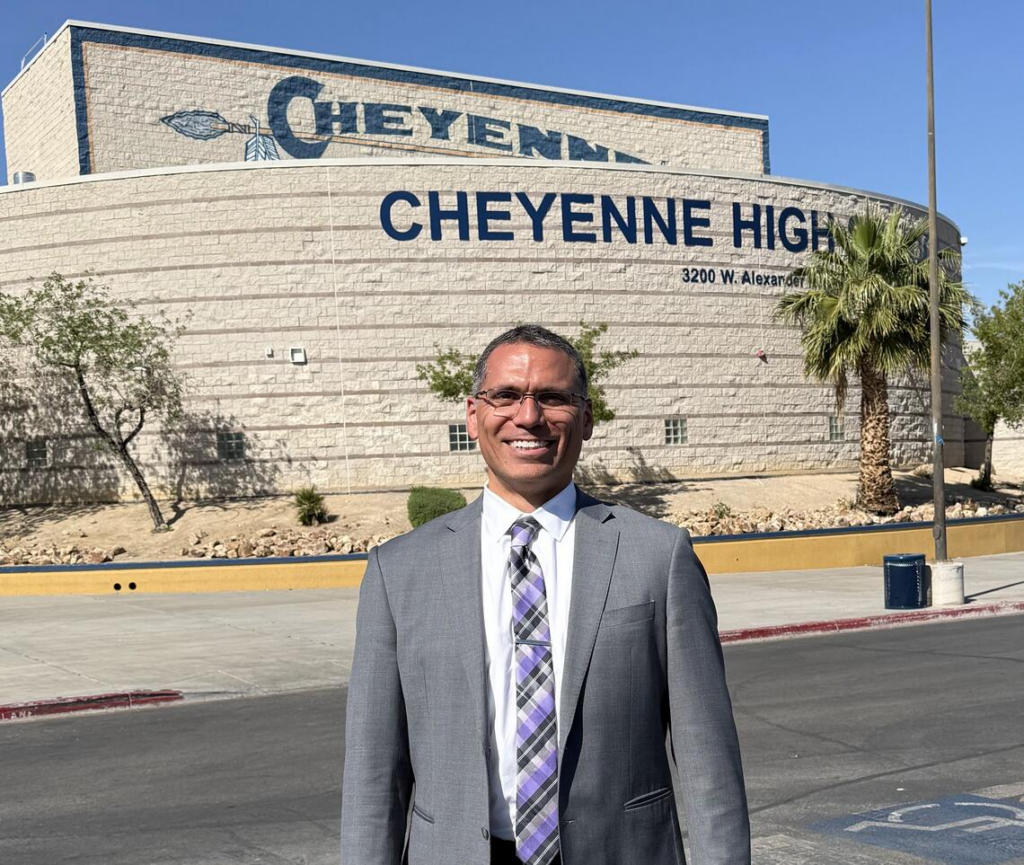
Four years ago, that was the reality at Cheyenne High School. Today, the school is almost fully staffed with a vacancy rate of 3.5%, a transformation that reflects years of strategic leadership, collaboration, and a commitment to growth. 

At the center of that transformation is Principal Anthony Nuñez, ‘06 M.Ed. Curriculum & Instruction, ‘09 M.Ed. Educational Leadership, whose strategy is built on vision and authenticity. 

Change Begins with Culture

“The first step was identifying our shared core values,” Anthony shared.  

When he first arrived at Cheyenne, the challenge was clear. Teachers were tired, and systems lacked structure. His plan of attack? Focus on culture.

Inspired by a book, Traction, Anthony and the staff conducted an exercise reflecting on the qualities of the individuals they admired most. Recurring trends in those responses helped them define the school’s values and establish a common vision for what Cheyenne should represent.

“And to this day, I think that our core values remain authentic to the staff.” 

The vision not only boosts staff morale but also plays a key role in recruitment. Anthony and the assistant principals involved in hiring tell candidates that the school is committed to improvement and growth, and that he will support anyone willing to learn and grow.

A Growth Mindset 

Anthony encourages his teachers to develop their practice over time rather than feel pressured to be perfect immediately. This growth mindset helps to create an environment where educators feel safe to grow professionally. 

“There’s a slightly different focus every year, but the goal is to keep growing and improving,” he shared.  

Now, the focus is beyond basic instructional practices; it also includes refining classroom management, strengthening lesson planning, and improving academic instruction.

Changing the Narrative

Before Anthony, Cheyenne had long carried a district-wide reputation as a difficult school. Anthony knew improving the school’s reputation required more than internal changes. One strategy was to give staff positive stories and data to share.

“A lot of what people know about our school is from what the people here are saying,” he said. 

Another strategy Anthony uses is increasing the school’s visibility. He has presented at conferences to share the school’s progress and also mentors other administrators.

“If I can talk about Cheyenne, I will talk about Cheyenne.”

Community partnerships have also played an important role. Events held at the school and collaborations with local and national organizations have brought new resources and positive attention to Cheyenne. For instance, the school hosted President Barack Obama twice. 

Beyond culture and collaboration, there is also a visible transformation of the school’s physical space. A larger school sign and redesigned outdoor spaces with turf have created welcoming areas for students to gather and build pride in their school. 

All of these efforts have yielded results that reinforce the shifting narrative. The school’s graduation rate rose to 88% from 75%, surpassing the district average, a testament to the fact that when teachers stay, students stay. 

Looking Ahead

Although the progress at Cheyenne has been significant, the work is far from finished.

“We are going to keep improving graduation rates, increase ACT performances, and ensure our [Career & Technical Education] programs give our students clear pathways into college or the workforce,” Anthony shared. 

Another priority for him is staff retention. Recruitment was the first step, but long-term success will depend on retaining the teachers and leaders who have helped rebuild the school.

Above all, the transformation of Cheyenne High School demonstrates what sustained leadership, collaboration, and a growth mindset can accomplish.
Wonderful Washoe Rebel – Spring 2025

Originally posted: Apr. 15, 2025

By: Jenn Oshiro Rivers

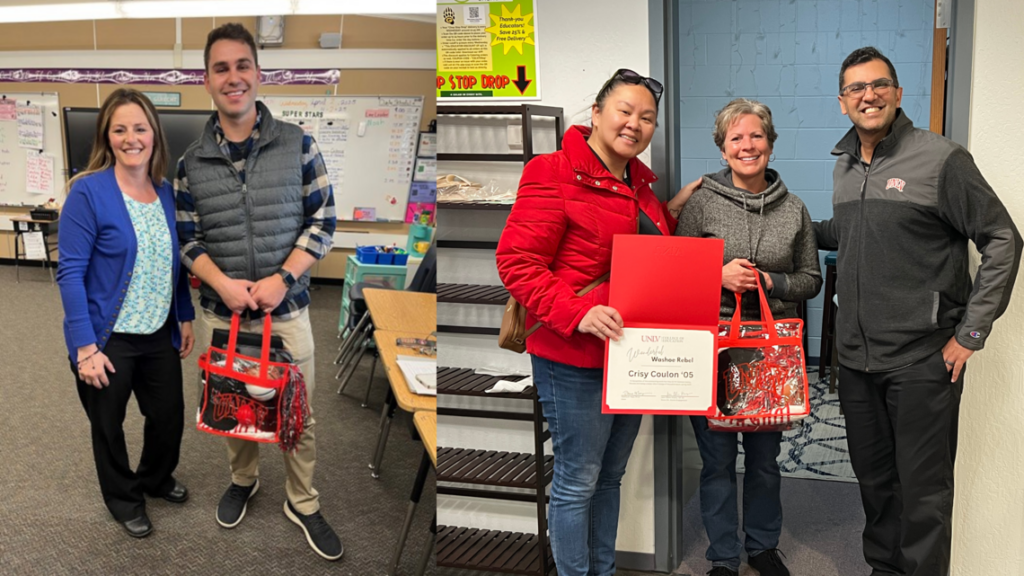
The UNLV College of Education is proud to announce the Spring 2025 Wonderful Washoe Rebel recipient, alumna Crisy Coulon ‘05 Ed.S. Educational Psychology.

Crisy currently serves as a Psychologist for Washoe County School District working with schools including Sparks and Galena high schools. She brought Hope Squad to Sparks HS, a peer-to-peer suicide prevention program. 

Her nominator shared, “Crisy goes above and beyond to help and serve others in our community. She is very humble and does not brag about all of her accomplishments and contributions. She also is a very VERY proud UNLV graduate.”

Additionally, the College is excited to recognize Mark Farthing ‘24 M.A.T. Elementary Education as an honorable mention. Mark is a fifth grade teacher at Towles Elementary School in Reno and has made an impact in and out of the classroom. His nominator shared, “He cares so much about his students and their success and goes above and beyond to build and maintain relationships with students and their families. He participates in our home visit program and regularly supports his students outside of school.”


If you know a UNLV College of Education alum living or working in Washoe County who deserves recognition, nominate them for the next award cycle.

GRAD REBEL STUDENT HIGHLIGHT: Jamie English

Originally posted: Apr. 14, 2026

By: COE Communications Staff

Jamie English is a second-year Master’s student in the college’s clinical mental health counseling program. She is currently doing her practicum at Innovative Minds Counseling, where she provides therapy for clients of all ages. She earned her Associate of Arts from the College of Southern Nevada and her Bachelor of Arts in psychology from UNLV. 

Jamie serves as a graduate assistant with the Graduate College’s communications and marketing unit, where she contributes to social media content, designs graphics, and creates written communications to highlight graduate student achievements, promote events, and support the college’s initiatives.

Jamie continues to embody her commitment to helping others through student leadership as a

Grad Rebel Advantage mentor for undergraduate students considering graduate school and as a mentor for the Mentoring Excellence, Nurturing Talents, Opportunities, and Resources for Success (MENTORS) Program, where she supports incoming graduate students and guides them through the transition into graduate school.

As a Samoan and the communications liaison of the Asian Pacific Islander Alliance, a

Graduate Registered Student Organization, Jamie is deeply committed to uplifting her community and celebrating her culture. Her volunteer work with the victim support Group in Samoa inspired her passion for helping others and advocating for mental health within her community. Upon completing her degree, she plans to provide counseling and mental health services in Polynesia, supporting the well-being of Polynesian communities.

Five Steps to Math Mastery: Key Takeaways from the 2025 UNLV STEM Education Meet

Originally posted: Apr. 11, 2025

By: Sakinah Musa

On Feb. 10, UNLV hosted the second edition of the STEM Education Meet with a focus on the paths to math mastery. The event brought together local institutions, K-16 STEM educators and instructors across Southern Nevada to share ideas on how to overcome systemic challenges in STEM education. 

From the keynote address on empowering STEM success by Tammi Perez-Rice, a plenary session on social justice in mathematics, short presentations, breakout sessions, and a panel session; the event was described as “an interesting collection of informational sessions” by Taylor Cayro, one of the attendees. 

The 2025 STEM Education Meet was a thought-provoking experience filled with conversations and lessons that resonate beyond the classroom. Here are five takeaways that will inspire you to take actions toward math mastery and STEM success. 

1. Students Are Changemakers

Associate Professor, Kari Kokka challenged STEM teachers to help their students recognize math literacy tools  to solve real-world issues. By using student-centered teaching approaches that encourage class discussions, students apply math concepts to the things they care about and build important social skills along the way. 

“I think bringing social justice into math will help the students improve their real-world applications and encourage empathy,” said Dolce Rebuli, a math tutor in UNLV’s Academic Success Center. 

2. Watch your (Math) Words

Numbers are important, but the words we use around the numbers shouldn’t be forgotten. According to Erin Smith, an assistant professor in the Teaching and Learning Department, how we listen, speak, read, and write about math can fuel students’ interest and understand its concepts, functions and processes. 

She suggested that math teachers include tools like words, diagrams, pictures, and tables in their lessons to help students understand and interpret math concepts in multiple ways.

3. Build a Math Culture

Teaching math effectively begins with creating a math culture. Kirsten Schauer, an assistant principal at the Advanced Technologies Academy, shared how the school is creating a math culture by building trust and investing in math teachers, as well as providing financial incentives for students who perform well. 

Vanessa Amogella, a math teacher at Durango High School, also discussed how collaboration between teachers in the school’s math department is helping them develop effective and connected math strategies to enhance student learning and success. 

4. Notes are Study Tools

Math notes are the perfect tools for helping students prepare for quizzes and exams but only when they know how to use them. Amy Mathis-Leonard and Jennfer Lile  shared note-taking strategies that teachers can use to lead students in understanding, retaining, and applying math concepts.  

They suggested how teachers can guide students through taking notes that focus on key math concepts and clear examples with proper notations. Math teachers can also encourage the students by permitting the use of notebooks during assessments (when appropriate) and planning short activities that utilize notebooks. 

5. Make Math fun

Math can be exciting, and Monika Neda and her colleagues shared gaming activities that math teachers can apply in the classroom. These activities will allow students to actively participate in the classroom while using math to explore different algebraic concepts.

Alumni Spotlight: Malvyn Barlaw ‘14

Originally posted: Apr. 10, 2026

By: COE Communications Staff

Name: Malvyn Barlaw

Degree: ‘14 B.S. Early Childhood Education

Current Employer: Acelero Learning

What do you think it is about early childhood education versus K-12 that interests you?

One of my philosophies is that all education is just early childhood education. If you can teach a little one the first steps in life, you can kind of tailor that and change it into higher ed. I say it a lot, but I feel like little ones are what I believe humanity is like, and how humanity should be. That’s what our base setting is, is how the kids view the world-with a lot of love and a lot of wonder. I want us to help each other like that.

Why do you think other alumni should get involved?

I believe in learning and teaching, and I feel that even as adults, we need to do that. We need to take care of our own social-emotional side and spiritual side. With just the way the world is now, there’s not a lot of facilitated outlets for that. So, the Alumni Association is that facilitation.

Do you have any favorite memories of UNLV as a student?

I met a lot of my best friends there. I met my fiance there. But I think, it’s so silly, one of my favorite memories is just taking a nap in the grass between classes. There used to be the Subway in the back behind the CEB building, and there’s the little grass patch. I’ll just take my hat and put on my head, just nap there.


Are you a COE alum? Let us know what you’ve got going on by submitting a Class Note or getting involved!

Student Profile: Expanding the Playing Field: Where Generosity Takes Our Students (Eliabeth Leon Zaragosa)

Originally posted: Apr. 10, 2025

By: Nancy Weaver

“I would have never completed a master’s or a Ph.D. had it not been for scholarships and graduate assistantships.” Elizabeth León Zaragoza, two-time UNLV graduate, didn’t beat around the bush when explaining the role funding played in her academic journey. 

By the time Elizabeth got to UNLV, she was eager to find a solution to two persistent challenges: how to make athletic training education more inclusive and how to use skills from athletic training to serve non-athlete members in the community. The barriers she uncovered and experienced firsthand were significant. 

Raising the Bar

Two years into her undergraduate degree in athletic training at Eastern Kentucky University, the industry’s professional certification organization announced a major change. Going forward, anyone entering the field would need a master’s degree to operate as trainers and  undergraduate athletic training programs were to be phased out. The decision, aimed to align athletic training with other health professions, raised concerns for Elizabeth. “It looks good on paper,” she says, “but it’s a moving target for students, especially those from low-income backgrounds. Scholarships and graduate assistantships made it possible for me to meet those demands, but I know many others aren’t as fortunate.” 

Sharing Knowledge. Saving Lives.

The second obstacle she looked to overcome hit closer to home. As a daughter of immigrant farm workers she recognized how her unique skill set could serve a population near and dear to her. “One of my uncles died while working in the fields,” Elizabeth shared. Knowing the difference she could make, she began working to find ways to support black and brown people, especially those in rural areas—helping them to develop life saving CPR and first aid skills. “Preventing heat exhaustion and cardiac death is a lot of what we face as athletic trainers. I’m in a unique position to teach these skills and improve outcomes for survivors.” she explained. 

Elizabeth’s game plan was coming together and, with the encouragement of Dr. Nancy Lough, she got to work on a higher education Ph.D. She sought out ways to diversify the playing field. Her research zeroed in on access to health care in athletic training, particularly for populations from rural and low socioeconomic backgrounds. “In supporting athletes, we’re often supporting people from underserved communities.” she explained. “I wanted to pursue a line of research that would help me to provide solutions for how athletic trainers as healthcare providers could do better outside of sports.”

Investment Drives Success.

Elizabeth also acknowledges that the generosity of donors and mentors can sometimes feel daunting. As a Holmes Scholar and multiple award winner she knew that “when someone invests in your dreams, there’s immense pressure to perform.” But that’s what scholarships are for—to help students fulfill their dreams. “Hopefully, your dreams include giving back to your community and helping others,” she continued. 

Today, Elizabeth serves as an assistant professor of athletic training for the Human Biology Department at the University of Wisconsin-Green Bay and is committed to paying it forward. Beyond the classroom, her research continues to address the disparities and downfalls she has witnessed firsthand. One project is specifically working to train farmworkers in CPR and first aid skills that are often inaccessible to communities in remote areas.

Her advice for current and future scholarship recipients is simple: “There’s no gatekeeping here. Share opportunities. Lend a hand. Build a better academic environment for everyone.” Elizabeth’s own journey is a testament to what’s possible when generosity meets determination. Through her teaching, research, and advocacy, she’s ensuring that the next generation of athletic trainers is more diverse, compassionate, and prepared to serve.