Teaching & Learning

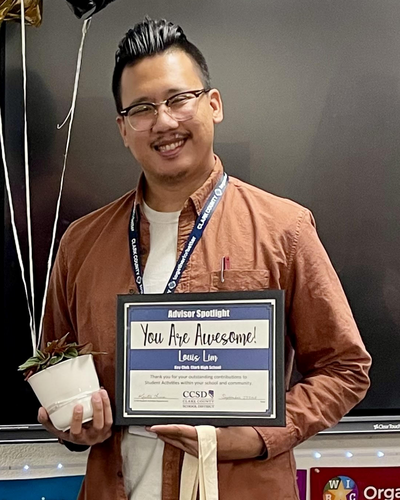
Alumni Spotlight: Louis Lim ‘18

Originally posted: May. 22, 2026

By: COE Communications Staff

Name: Louis Lim 

Degree: ‘18 B.S.Ed. Secondary Ed Social Studies 

Current Employer: CCSD | Clark HS

What led you to pursue a degree in education? 

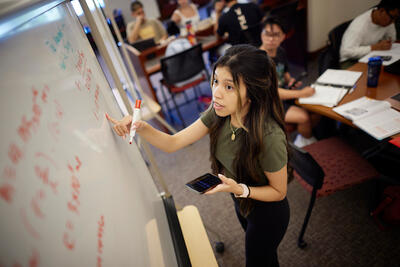
In high school, I had a band teacher who was really supportive of me and a government teacher who had projects where we had to go out to the communities, canvas, volunteer, and talk about our experiences. It was one of the most engaging, life-changing things. I grew up watching a lot of History Channel, and I was really passionate about social studies because it was the one thing I was good at. Those two teachers really helped influence me to at least try it.

What was a fun and/or unique class you took? 

Michael Bowers’ class about the first amendment and women’s constitutional rights. He was such a great professor. I used the stuff that he instilled in me to teach my students about constitutional rights and when we get to Enlightenment and revolutions. Then I had a class with Dr. Steve Grubaugh in the College of Education; he gave students an opportunity to find a way to teach our content through different mediums like music, videogames, books, or articles. 

What advice do you have for current UNLV students? 

I would say that it’s okay to be vulnerable, it’s okay to ask for help, and it’s okay to make mistakes because, at the end of the day, the kids have an understanding that they know if you come into the classroom and you have a character or you’re not being authentic. Be yourself and reflect on the teachers that changed your life. Match the same energy as the one teacher who has made that impact on you. 


Are you a COE alum? Let us know what you’ve got going on by submitting a Class Note or getting involved!

Miguel Gonzales Named Incoming Chair of Department of Educational Psychology, Leadership, and Higher Education

Originally posted: May. 15, 2025

By: COE Communications Staff

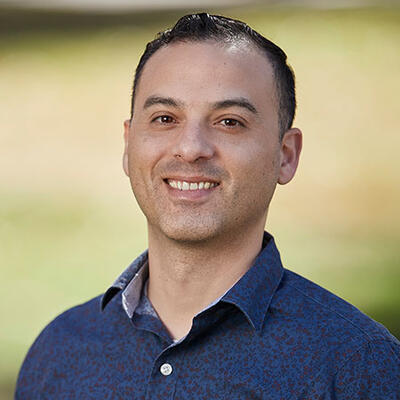
We are pleased to share that Miguel Gonzales has been approved as the incoming chair of the Department of Educational Psychology, Leadership, and Higher Education (EPLHE), effective July 1, 2025. 

He brings a wealth of administrative experience that positions him well for this leadership role. Since arriving at UNLV, Miguel has served as program coordinator of the Educational Policy and Leadership program. Before his time at UNLV, he held key executive roles in K–12 education, including principal/executive director of the Family Partnership Charter School and assistant principal in the Santa Barbara Unified School District.

There is no doubt that Steven Nelson, outgoing EPLHE department chair, significantly expanded the department’s statewide and national reach during his tenure, advancing access to higher education and raising the visibility of EPLHE’s academic programs. We thank him for his service to the department and the college. 

Benita Brooks Named Incoming Teaching & Learning Department Chair

Originally posted: May. 15, 2025

By: COE Communications Staff

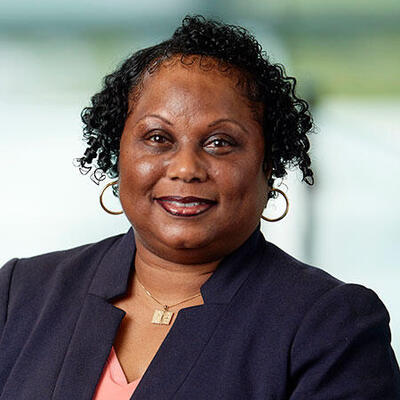
We are pleased to announce that Benita Brooks has been approved as the incoming chair of the Department of Teaching & Learning, effective July 1, 2025.

Dr. Brooks has served as faculty chair over the past year and is a tenured associate professor in literacy education. Prior to joining UNLV, she served as assistant dean for diversity, equity, and inclusion and as a tenured faculty member at Sam Houston State University, where she also directed the AACTE Holmes Scholars Program. Her leadership is deeply informed by her earlier career as a secondary English/language arts teacher in Nevada, California, and Texas.

We thank PG Schrader for his seven years of leadership. During his tenure,  T&L has undergone thoughtful infrastructure and bylaws transitions, and has expanded its enrollment, research capacity, and community engagement-with a focused commitment to student success and increasing higher education access for aspiring and advanced educators.

Saturday STEM Students Win Presidential AI Challenge

Originally posted: Apr. 7, 2026

By: Nancy Weaver

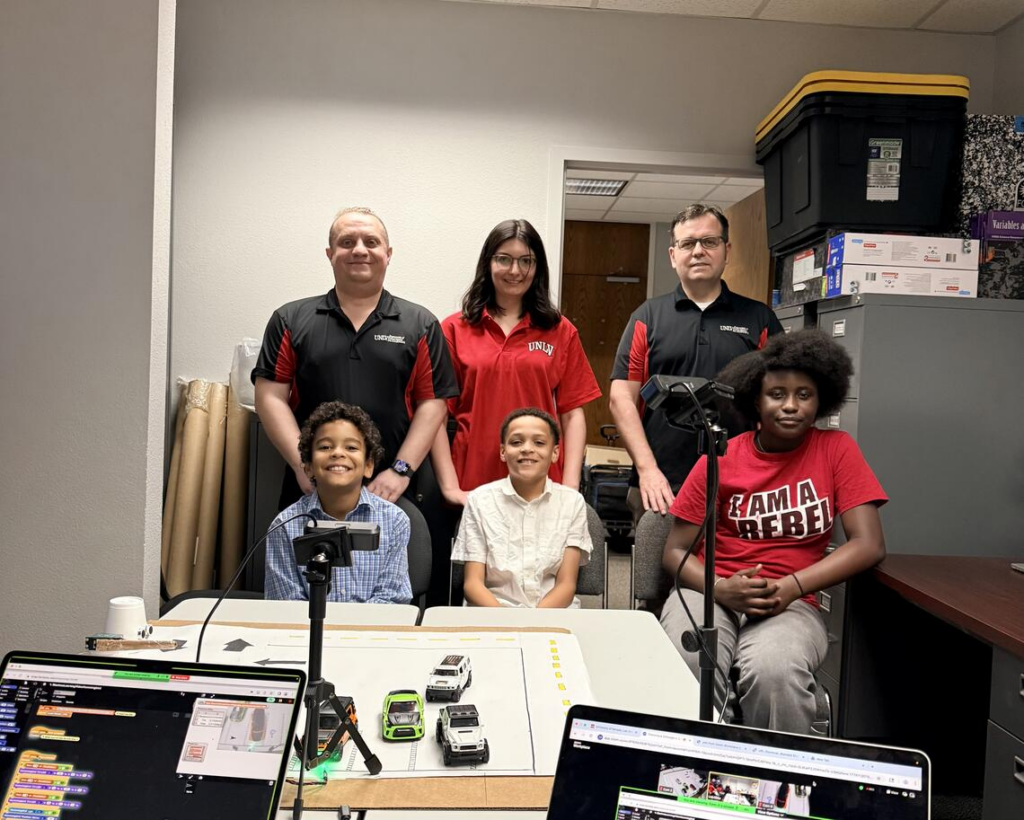
A team of elementary school students who participated in the UNLV Saturday STEM Program last fall won the statewide Elementary Category Track II (Technical/Implementation) division in the Presidential AI Challenge. 

This achievement highlights the impact of early exposure to STEM and AI education. Structured mentorship and hands-on learning empowers young students to innovate and succeed. The Saturday STEM Program, administered by the Center for Mathematics, Science, and Engineering Education (CMSEE), continues to foster the next generation of scientists, engineers, and problem-solvers through engaging, real-world learning experiences.

The Winning Project

Elementary school students Vasili Moseley, Tasheni Kamanga, and Joshua Scott developed a smart parking system using AI and sensor-based technologies to detect incorrect parking and improve overall parking efficiency. 

The project originated in a six-week “Integrating Engineering, Robotics, and AI for STEM Learning” class, which focused on emerging technologies through hands-on, project-based experiences. Students learned computer science concepts and artificial intelligence strategies through hands-on experience with sensors, microcontrollers, and LEDs. Following the course, students were invited to a four-week workshop offering structured mentorship and support to develop their competition projects.

Their project was selected from more than 2,500 submissions nationwide, earning recognition as one of only 328 state-level winners.The team has since advanced to the regional competition, where they presented to a panel of judges, competing alongside other state champions. Results from the next stage of the competition are pending.

Learning behind the Learning

The course, taught by CMSEE center director Hasan Deniz, and students Dilara Kara-Zorluoglu, and Metehan Zorluoglu, was developed through a collaborative National Science Foundation grant, “Cultivating Artificial Intelligence Literacy through Linguistically Inclusive Integrated Elementary Curriculum via Educational Robotics.” Drniz is the primary investigator and Erdogan Kaya (University of Texas at Arlington),  Ezgi Yesilyurt (Utah State University), and Refika Turgut (University of South Carolina Upstate) were co-PIs.

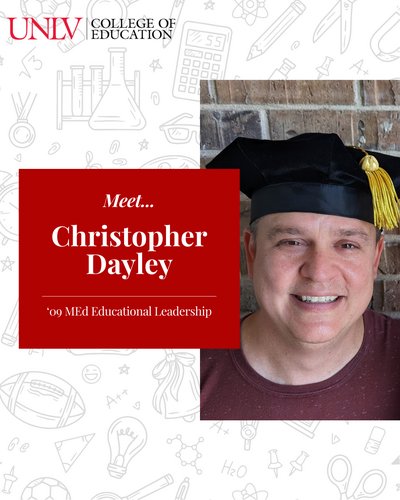
Alumni Spotlight: Christopher Dayley ’09

Originally posted: Apr. 29, 2025

By: COE Communications Staff

Name: Christopher Dayley 

Degree: M.Ed. Educational Leadership 

Current Role: Assistant Professor and Director of the Master of Arts in Technical Communication (MATC) at Texas State University 

What are some key aspects of campus culture that helped prepare you for the professional world?

Being involved in various campus activities exposed me to diverse perspectives and ideas. UNLV was a place where I could learn from people of all backgrounds. The sense of community and collaboration prepared me to be adaptable and understanding in my professional life.

What are the most sought after skills in your field right now?

Critical thinking, research skills, and the ability to communicate effectively are essential. The field of technical communication also demands an understanding of rhetoric and the ability to analyze how language influences thought and behavior. Cultural competence and an awareness of social justice issues are increasingly important.

Tell usabout you as a person!

I play in two local community bands—a polka band and a traditional community band. One of the highlights was touring Germany with them. My wife, a UNLV alum, and I have four kids. Our oldest daughter is currently a theater major at UNLV, and it’s been amazing to see her carry on the tradition.

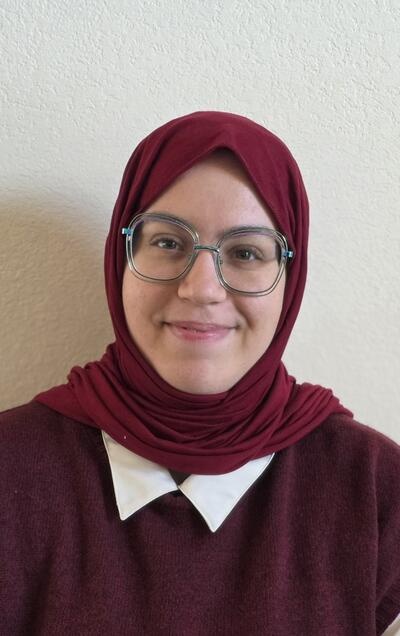
Alumni Spotlight: Safiyya Bintali ‘24

Originally posted: Apr. 23, 2026

By: COE Communications Staff

Name: Safiyya Bintali 

Degree: ‘24 B.S.Ed. Secondary Ed

Current Employer: Multiple 

Did you have a favorite or secret study spot when you were a student? 

In the Carlson Education Building; I always used to go to the third floor because not many people went there, since it’s all faculty offices. There was also a little table on the second floor at the end, and no one was ever there. Those were my favorite spots, because they’re so quiet, and I could focus. 

What do you think is something people should know about you? 

When I was growing up, one of my really bad habits was bringing stray cats home. I would just pick them up and hide them in the house, because I felt so bad for them. So I would bring them home, and then obviously they’d get discovered by my parents. They all found good homes eventually and were happy. 

What is your message to other alumni as to why they should stay involved and re-engage with UNLV? 

Having a type of community that can follow you forever, you get to connect with people who are experts in their field, and that’s a very rare thing. No matter where you are in the world, you have a place you can go back to that values you and cares about you. Seeing people from this little community all over the world is one of the things that remains stable in a changing world. Knowing that’s a place that you can always come back to. 

Are you a COE alum? Let us know what you’ve got going on by submitting a Class Note or getting involved!

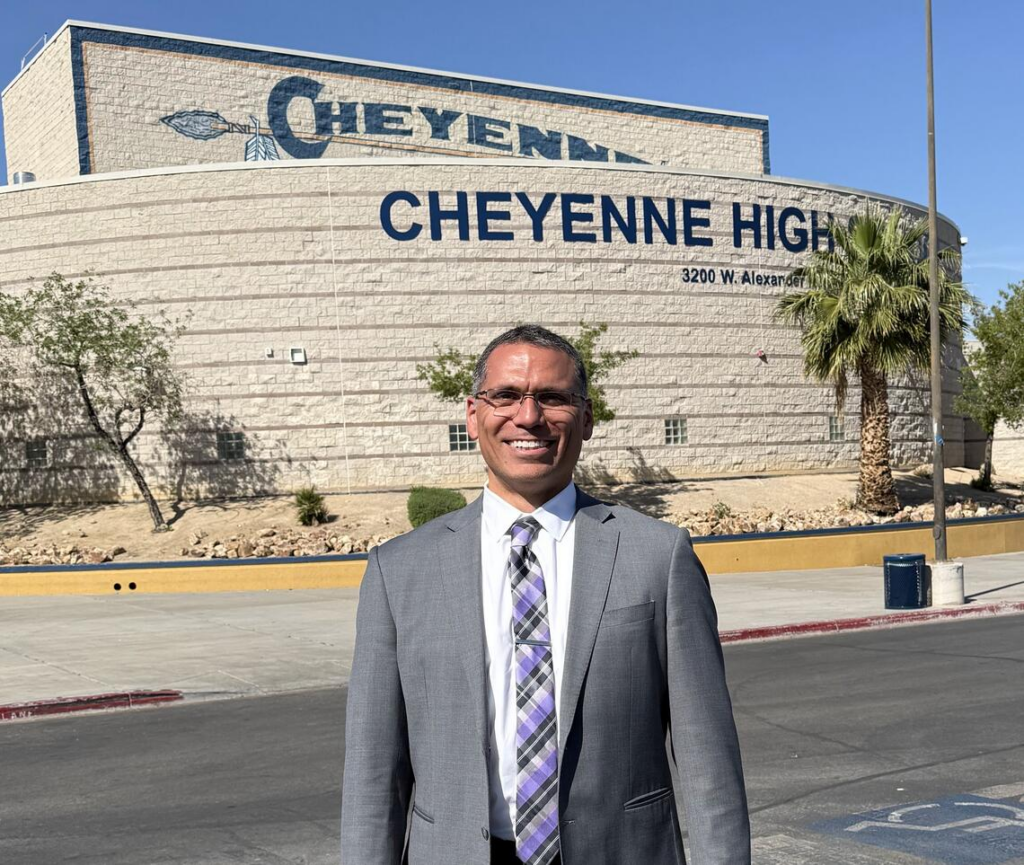
Turning the Tide: How Anthony Nuñez is rebuilding Cheyenne High School through vision and growth

Originally posted: Apr. 20, 2026

By: Sakinah Musa

What would you do if your business needed 100 employees but you only had 60? Who picks up the workload of the other 40? Who skips breaks, covers gaps, and keeps things running? 

And how long until the people barely holding it together start to burn out and the system collapses? 

Four years ago, that was the reality at Cheyenne High School. Today, the school is almost fully staffed with a vacancy rate of 3.5%, a transformation that reflects years of strategic leadership, collaboration, and a commitment to growth. 

At the center of that transformation is Principal Anthony Nuñez, ‘06 M.Ed. Curriculum & Instruction, ‘09 M.Ed. Educational Leadership, whose strategy is built on vision and authenticity. 

Change Begins with Culture

“The first step was identifying our shared core values,” Anthony shared.  

When he first arrived at Cheyenne, the challenge was clear. Teachers were tired, and systems lacked structure. His plan of attack? Focus on culture.

Inspired by a book, Traction, Anthony and the staff conducted an exercise reflecting on the qualities of the individuals they admired most. Recurring trends in those responses helped them define the school’s values and establish a common vision for what Cheyenne should represent.

“And to this day, I think that our core values remain authentic to the staff.” 

The vision not only boosts staff morale but also plays a key role in recruitment. Anthony and the assistant principals involved in hiring tell candidates that the school is committed to improvement and growth, and that he will support anyone willing to learn and grow.

A Growth Mindset 

Anthony encourages his teachers to develop their practice over time rather than feel pressured to be perfect immediately. This growth mindset helps to create an environment where educators feel safe to grow professionally. 

“There’s a slightly different focus every year, but the goal is to keep growing and improving,” he shared.  

Now, the focus is beyond basic instructional practices; it also includes refining classroom management, strengthening lesson planning, and improving academic instruction.

Changing the Narrative

Before Anthony, Cheyenne had long carried a district-wide reputation as a difficult school. Anthony knew improving the school’s reputation required more than internal changes. One strategy was to give staff positive stories and data to share.

“A lot of what people know about our school is from what the people here are saying,” he said. 

Another strategy Anthony uses is increasing the school’s visibility. He has presented at conferences to share the school’s progress and also mentors other administrators.

“If I can talk about Cheyenne, I will talk about Cheyenne.”

Community partnerships have also played an important role. Events held at the school and collaborations with local and national organizations have brought new resources and positive attention to Cheyenne. For instance, the school hosted President Barack Obama twice. 

Beyond culture and collaboration, there is also a visible transformation of the school’s physical space. A larger school sign and redesigned outdoor spaces with turf have created welcoming areas for students to gather and build pride in their school. 

All of these efforts have yielded results that reinforce the shifting narrative. The school’s graduation rate rose to 88% from 75%, surpassing the district average, a testament to the fact that when teachers stay, students stay. 

Looking Ahead

Although the progress at Cheyenne has been significant, the work is far from finished.

“We are going to keep improving graduation rates, increase ACT performances, and ensure our [Career & Technical Education] programs give our students clear pathways into college or the workforce,” Anthony shared. 

Another priority for him is staff retention. Recruitment was the first step, but long-term success will depend on retaining the teachers and leaders who have helped rebuild the school.

Above all, the transformation of Cheyenne High School demonstrates what sustained leadership, collaboration, and a growth mindset can accomplish.

Wonderful Washoe Rebel – Spring 2025

Originally posted: Apr. 15, 2025

By: Jenn Oshiro Rivers

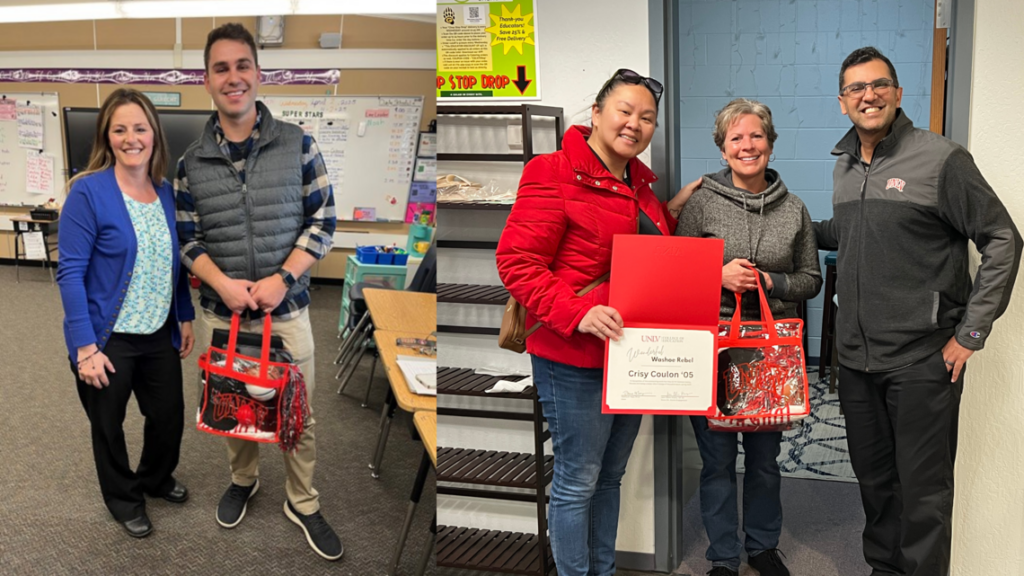
The UNLV College of Education is proud to announce the Spring 2025 Wonderful Washoe Rebel recipient, alumna Crisy Coulon ‘05 Ed.S. Educational Psychology.

Crisy currently serves as a Psychologist for Washoe County School District working with schools including Sparks and Galena high schools. She brought Hope Squad to Sparks HS, a peer-to-peer suicide prevention program. 

Her nominator shared, “Crisy goes above and beyond to help and serve others in our community. She is very humble and does not brag about all of her accomplishments and contributions. She also is a very VERY proud UNLV graduate.”

Additionally, the College is excited to recognize Mark Farthing ‘24 M.A.T. Elementary Education as an honorable mention. Mark is a fifth grade teacher at Towles Elementary School in Reno and has made an impact in and out of the classroom. His nominator shared, “He cares so much about his students and their success and goes above and beyond to build and maintain relationships with students and their families. He participates in our home visit program and regularly supports his students outside of school.”


If you know a UNLV College of Education alum living or working in Washoe County who deserves recognition, nominate them for the next award cycle.

Five Steps to Math Mastery: Key Takeaways from the 2025 UNLV STEM Education Meet

Originally posted: Apr. 11, 2025

By: Sakinah Musa

On Feb. 10, UNLV hosted the second edition of the STEM Education Meet with a focus on the paths to math mastery. The event brought together local institutions, K-16 STEM educators and instructors across Southern Nevada to share ideas on how to overcome systemic challenges in STEM education. 

From the keynote address on empowering STEM success by Tammi Perez-Rice, a plenary session on social justice in mathematics, short presentations, breakout sessions, and a panel session; the event was described as “an interesting collection of informational sessions” by Taylor Cayro, one of the attendees. 

The 2025 STEM Education Meet was a thought-provoking experience filled with conversations and lessons that resonate beyond the classroom. Here are five takeaways that will inspire you to take actions toward math mastery and STEM success. 

1. Students Are Changemakers

Associate Professor, Kari Kokka challenged STEM teachers to help their students recognize math literacy tools  to solve real-world issues. By using student-centered teaching approaches that encourage class discussions, students apply math concepts to the things they care about and build important social skills along the way. 

“I think bringing social justice into math will help the students improve their real-world applications and encourage empathy,” said Dolce Rebuli, a math tutor in UNLV’s Academic Success Center. 

2. Watch your (Math) Words

Numbers are important, but the words we use around the numbers shouldn’t be forgotten. According to Erin Smith, an assistant professor in the Teaching and Learning Department, how we listen, speak, read, and write about math can fuel students’ interest and understand its concepts, functions and processes. 

She suggested that math teachers include tools like words, diagrams, pictures, and tables in their lessons to help students understand and interpret math concepts in multiple ways.

3. Build a Math Culture

Teaching math effectively begins with creating a math culture. Kirsten Schauer, an assistant principal at the Advanced Technologies Academy, shared how the school is creating a math culture by building trust and investing in math teachers, as well as providing financial incentives for students who perform well. 

Vanessa Amogella, a math teacher at Durango High School, also discussed how collaboration between teachers in the school’s math department is helping them develop effective and connected math strategies to enhance student learning and success. 

4. Notes are Study Tools

Math notes are the perfect tools for helping students prepare for quizzes and exams but only when they know how to use them. Amy Mathis-Leonard and Jennfer Lile  shared note-taking strategies that teachers can use to lead students in understanding, retaining, and applying math concepts.  

They suggested how teachers can guide students through taking notes that focus on key math concepts and clear examples with proper notations. Math teachers can also encourage the students by permitting the use of notebooks during assessments (when appropriate) and planning short activities that utilize notebooks. 

5. Make Math fun

Math can be exciting, and Monika Neda and her colleagues shared gaming activities that math teachers can apply in the classroom. These activities will allow students to actively participate in the classroom while using math to explore different algebraic concepts.

A World-Class Teacher

Originally posted: Mar. 15, 2026

By: Sakinah Musa


Brian made his way to UNLV and earned a bachelor’s degree in elementary education in 2005. Soon after, he began teaching at Hollingsworth Elementary and discovered the possibility of teaching abroad. 

“I was hired mid-year, and the teacher I was taking over from had taught in the Marshall Islands,” he recalls.

Without guidance, he searched for schools the hard way–googling country names and sending paper applications. 

Of all his applications, only a school in Kuwait responded with a two-year contract offer. Although he knew nothing about the country, Brian jumped at the opportunity.

“That was part of the adventure. If I didn’t like it, I could just get on the plane and come back.”

Teaching Abroad: The Good, The Rough, and The Uncertain

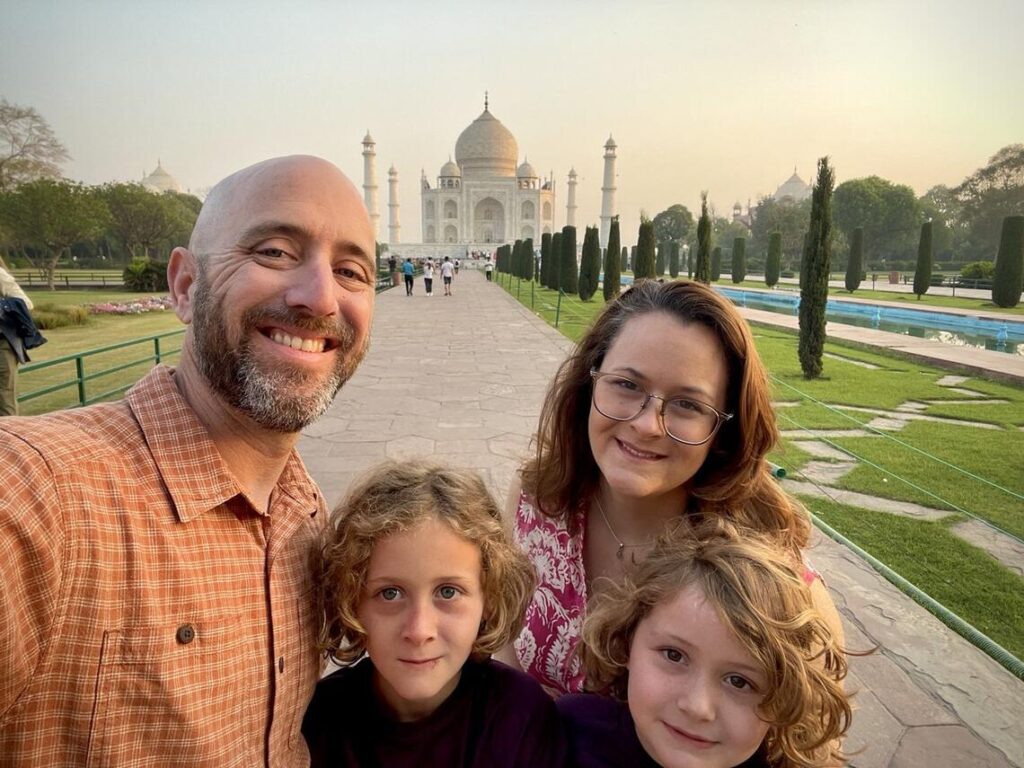
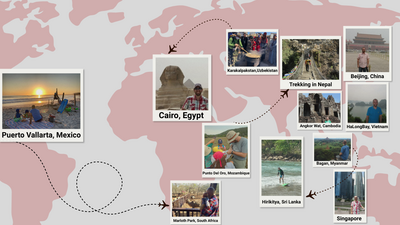
In his sixteen years, Brian taught in Kuwait, Vietnam, Mexico, Mozambique, China, and Uzbekistan. Along the way, he married a fellow teacher, had two children in two different countries, and learned some valuable lessons about how different countries perceive the value of education.

Across all of these countries, Brian saw what school meant to different families. While some parents worried that their children were not reading early, others viewed literacy as something that develops naturally over time. 

“Coming from America, you find out that it’s not such a big deal in other places,” he says. 

These contrasts taught him that learning does not follow a single universal path, and in the end, parents everywhere want their kids to have a meaningful education.

Of all the places he taught, Mozambique stands out as a favorite because it fit him professionally and personally. It was his first experience teaching the International Baccalaureate Primary Years Programme, which emphasized student choice and inquiry. The country was also especially welcoming to families. 

However, not every experience was as positive. In Vietnam, Brian worked at a school where leadership instability created uncertainty, and paychecks arrived late. The experience taught him to look carefully at a school’s stability before accepting a position.

Ultimately, teaching across continents gave Brian a broader perspective on education and culture, and unique experiences like attending the Futsal World Cup in Tashkent, and visiting places he wouldn’t have been able to. 

Building Relationships Across Cultures and Adapting

“Everyone knows everyone.”

Brian describes school communities abroad as “small worlds” where you work with the same colleagues every day, see students and their families at school and in social settings, and where administrators, teachers, parents, and students form connected circles. 

These school communities are also spaces where cultures and identities intersect, and some celebrate this diversity through events such as International Day. 

For Brian, living and working abroad means balancing teaching with the part-time job of navigating life in a new system. 

“You have to be willing to learn local customs and avoid missteps that make you stand out, because you already stand out as a foreigner, “ he says. 

Since returning to the US, Brian has experienced reverse culture shock, and he now finds ordinary things, like fully stocked grocery aisles, overwhelming after years in places with fewer choices. 

Advice to Aspiring International Educators: Go For It

“It’s not as scary as it seems,” Brian says

To anyone considering teaching abroad, Brian’s advice is to be open-minded and adaptable. Schools typically support teachers with visas, flights, accommodations, and sometimes, professional development funds, which take care of many headaches. 

He also suggests applying through recruiting agencies such as Search Associates and Global Recruitment Collaborative to skip the rookie mistakes he made. 

As Brian’s family demonstrated, with patience, perseverance, and an open mind, teaching can be a passport to the world.