News Stories

A World-Class Teacher

Originally posted: Mar. 15, 2026

By: Sakinah Musa

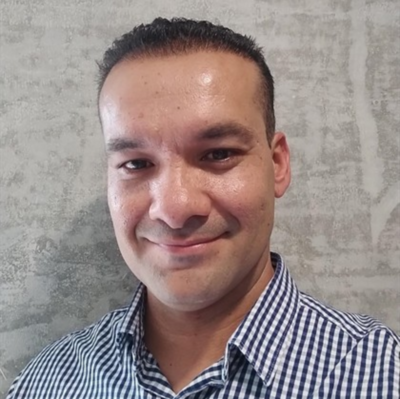
Brian made his way to UNLV and earned a bachelor’s degree in elementary education in 2005. Soon after, he began teaching at Hollingsworth Elementary and discovered the possibility of teaching abroad. 

“I was hired mid-year, and the teacher I was taking over from had taught in the Marshall Islands,” he recalls.

Without guidance, he searched for schools the hard way–googling country names and sending paper applications. 

Of all his applications, only a school in Kuwait responded with a two-year contract offer. Although he knew nothing about the country, Brian jumped at the opportunity.

“That was part of the adventure. If I didn’t like it, I could just get on the plane and come back.”

Teaching Abroad: The Good, The Rough, and The Uncertain

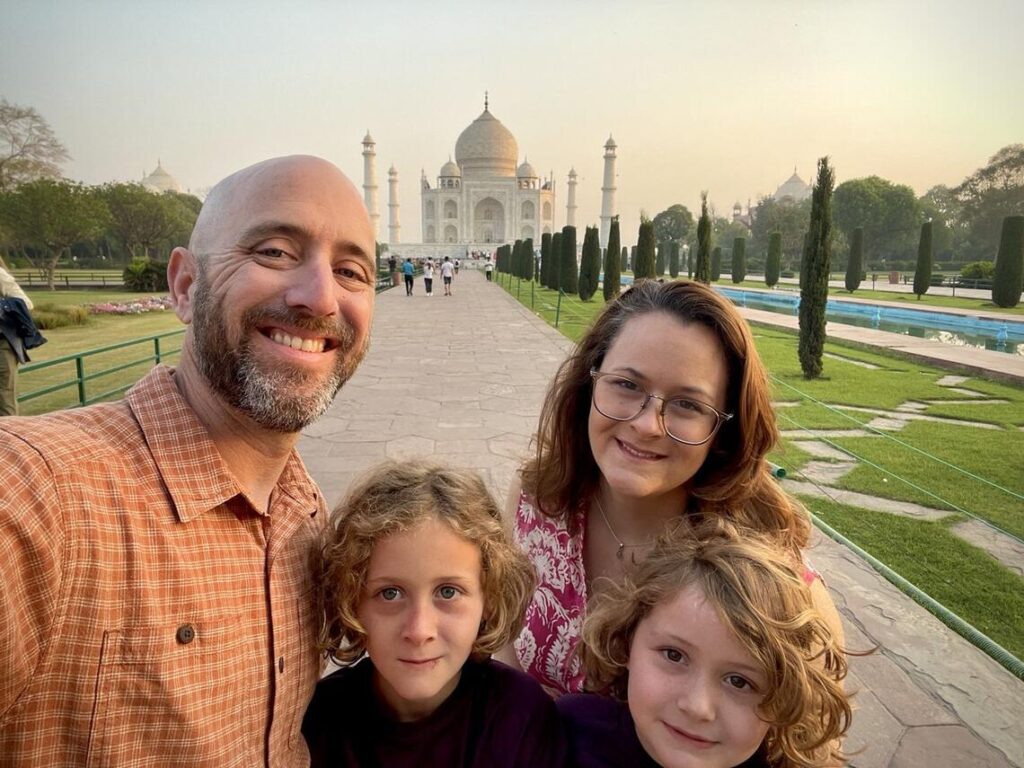
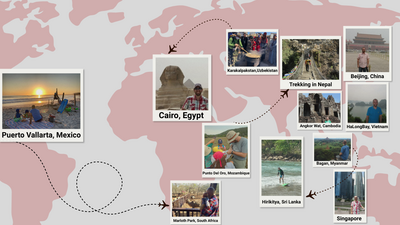
In his sixteen years, Brian taught in Kuwait, Vietnam, Mexico, Mozambique, China, and Uzbekistan. Along the way, he married a fellow teacher, had two children in two different countries, and learned some valuable lessons about how different countries perceive the value of education.

Across all of these countries, Brian saw what school meant to different families. While some parents worried that their children were not reading early, others viewed literacy as something that develops naturally over time. 

“Coming from America, you find out that it’s not such a big deal in other places,” he says. 

These contrasts taught him that learning does not follow a single universal path, and in the end, parents everywhere want their kids to have a meaningful education.

Of all the places he taught, Mozambique stands out as a favorite because it fit him professionally and personally. It was his first experience teaching the International Baccalaureate Primary Years Programme, which emphasized student choice and inquiry. The country was also especially welcoming to families. 

However, not every experience was as positive. In Vietnam, Brian worked at a school where leadership instability created uncertainty, and paychecks arrived late. The experience taught him to look carefully at a school’s stability before accepting a position.

Ultimately, teaching across continents gave Brian a broader perspective on education and culture, and unique experiences like attending the Futsal World Cup in Tashkent, and visiting places he wouldn’t have been able to. 

Building Relationships Across Cultures and Adapting

“Everyone knows everyone.”

Brian describes school communities abroad as “small worlds” where you work with the same colleagues every day, see students and their families at school and in social settings, and where administrators, teachers, parents, and students form connected circles. 

These school communities are also spaces where cultures and identities intersect, and some celebrate this diversity through events such as International Day. 

For Brian, living and working abroad means balancing teaching with the part-time job of navigating life in a new system. 

“You have to be willing to learn local customs and avoid missteps that make you stand out, because you already stand out as a foreigner, “ he says. 

Since returning to the US, Brian has experienced reverse culture shock, and he now finds ordinary things, like fully stocked grocery aisles, overwhelming after years in places with fewer choices. 

Advice to Aspiring International Educators: Go For It

“It’s not as scary as it seems,” Brian says

To anyone considering teaching abroad, Brian’s advice is to be open-minded and adaptable. Schools typically support teachers with visas, flights, accommodations, and sometimes, professional development funds, which take care of many headaches. 

He also suggests applying through recruiting agencies such as Search Associates and Global Recruitment Collaborative to skip the rookie mistakes he made. 

As Brian’s family demonstrated, with patience, perseverance, and an open mind, teaching can be a passport to the world.
Alumni Spotlight: Gabriela Kula ‘19

Originally posted: Mar. 13, 2026

By: COE Communications Staff

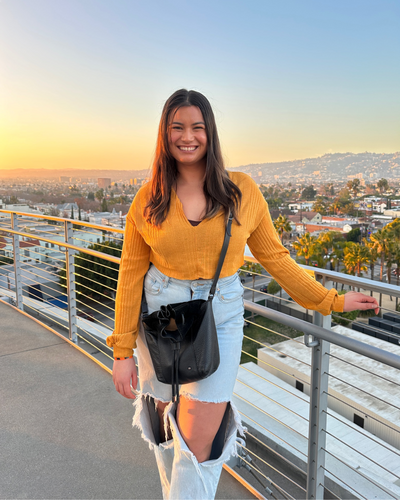
Name: Gabriela Kula

Degree: ‘19 M.Ed. Curriculum & Instruction

Current Employer: Fragner Seifert Pace & Mintz

Have you ever experienced teacher burnout? How did you navigate that?

When I was teaching the video production program in journalism. I wasn’t interacting with other teachers. I was just isolated in this computer lab by myself, and nobody else was teaching the curriculum I was teaching. My UNLV classes and my Teach for America program were really helpful with that because it gave me a time every week to go to class and talk about the issues I was dealing with in the classroom.

What skills did you gain as a teacher that are or have become useful for you?

I found my teaching skills so helpful for law school itself. When you’re a teacher, you become the perfect student. That was really helpful for going back to school because I knew that you had to be an active listener. You have to take notes in a way that you’ll remember. All of these things that maybe I wouldn’t have paid attention to if I didn’t learn it as a teacher first.

Tell me about you as a person not a professional. Favorite hobbies? 

I lived in Boston for college, then I moved to Vegas to teach, and then I moved to San Diego for law school. I’ve traveled at least a little bit. I’ve spent my twenties all around the country, which was really cool. These days, I do things that excite me. I try to go to concerts wherever I can. I just went to Mau P. He’s a DJ, and he does these crazy long sets. I went to one of his sets, and it was six hours long.

Are you a COE alum? Let us know what you’ve got going on by submitting a Class Note or getting involved!

Get an “in” with Melvin

Originally posted: Feb. 6, 2026

By: Sakinah Musa

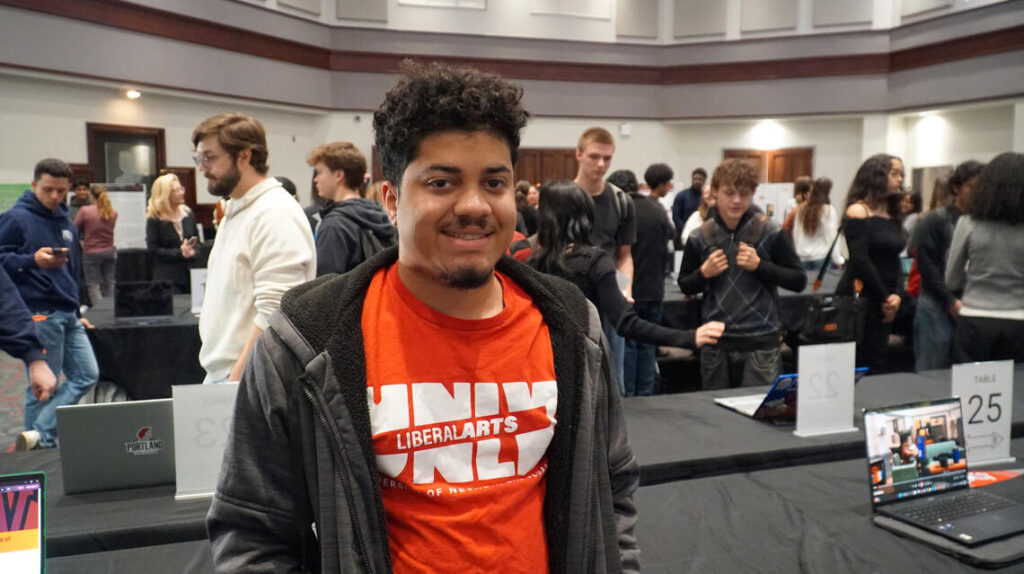
Earlier this month, College of Education students gathered for a long-awaited student mixer – a casual, no-pressure event designed to help students connect, get involved, and find their place beyond the classroom. 

If you missed it, have no fear. You’ve got an “in” with Melvin Taylor, a human services major, veteran, and CSUN senator who believes one thing above all else: students thrive when they feel connected.

Why Connection Matters

Taking a page from Melvin’s lived experiences, students who are connected feel supported, and are more likely to persist and succeed.

“When I was successful at the community college, it was because I was involved,” Melvin said. “I had staff, faculty, and club members around me who supported me.”

If you want to get involved, the college community is home to many organizations, including:

  • The college’s ambassadors
  • PALS mentors
  • Tau Upsilon Alpha (the national organization for human services majors)
  • The Student Organization of Addiction Professionals
  • Chi Sigma Iota (Counseling Academic and Professional Honor Society)
  • And more

Planning on a teaching career? Sign up for Rebel Educators and build your community within the College of Education and across UNLV. It’s a great way to build your leadership and organizational management skills. 

The Man Behind the Push

A non-traditional student and long-time Vegas resident, Melvin brings years of leadership experience to his role as COE’s CSUN Senator.

After completing his service as a yeoman in the U.S. Navy, Melvin returned to school, supported by the Veterans Affairs Veteran Readiness and Employment (VR&E) program, with a renewed sense of purpose and a clear goal: to develop professional skills that would enable him to serve others, particularly veterans navigating life after service. 

A goal that ultimately led him to pursue a bachelor’s degree in human services. 

As if tackling the academic challenges of college life wasn’t enough, Melvin built on his experience as the San Diego City College student government president. Not long after his conversion to Rebel status, he began attending CSUN meetings and realized something was missing.

“For about two semesters, I watched the meetings and saw that our college didn’t have a seat at the table,” he said. “When elections came around, and that seat was still empty, I decided to run.”

Today, his priorities include ensuring consistent representation for the college’s students. He’s also advocating for grants and scholarships, particularly for freshmen and sophomores, and encouraging his fellow Rebels to get involved with organizations, clubs, and events within the college and throughout the university. 

More Than a Role

Outside of academics and student advocacy, Melvin is a grandfather of nine. He loves dancing, enjoys live music, and has even met two U.S. presidents, Barack Obama and Bill Clinton. He also serves as the Special Projects Officer for the Rebel Vets Organization.

Get Connected

Above all, Melvin wants students of the College of Education to know they’re not alone.

“We’re here to support you and help make life more manageable while you’re here,” he said. “There’s always something happening on campus—sometimes you just need someone to help you find it.

Alumni Spotlight: Victor Macias ‘14

Originally posted: Feb. 27, 2026

By: COE Communications Staff

Name: Victor Macias

Degree: ‘14 M.S. Clinical Mental Health Counseling

Current Employer: Cortica

What are your favorite memories from UNLV?

I really enjoyed being a GA because I feel like not only was I a full-time student in the clinical program, but also being a GA submerged me into the college experience. When I went full-time, I had four classes a semester and I was also a GA helping with research or with whatever assignment they gave me with other GAs. That cohort of ours really connected. It really made it like the university experience that we imagine.

Did you have a mentor while you were at UNLV or do you have one now? Why is this important?

Dr. Smith, he would definitely fit the mold as my mentor because I saw him. I saw his passion. In some respect, when you truly engage in the topics at hand, you’re discovering yourself. It’s good to have some sort of a beacon or a lighthouse. And you know, it does provide some sort of direction, a sort of a compass.

What advice do you have for current UNLV students?

In this time that you’re developing as a human being and you’re learning all of these things, learn about your center and what grounds you. What brings you back to you. And know how to get there. Know the path. The particular path to get there.


Are you a COE alum? Let us know what you’ve got going on by submitting a Class Note or getting involved!

Coming Home and Working Together Reflections on the 11th Annual Summit on Nevada Education

Originally posted: Feb. 24, 2026

By: Sakinah Musa

For Sarah Ledon, UNLV alumna, ’04 M.Ed. Curriculum and Instruction, and senior vice president of Leading Educators, the 11th Annual Summit on Nevada Education was more than a homecoming. It reflected the continued commitment of education and mental health leaders and practitioners to Nevada’s students. 

“There is something powerful about coming home and seeing how far the work has come,” she shared. 

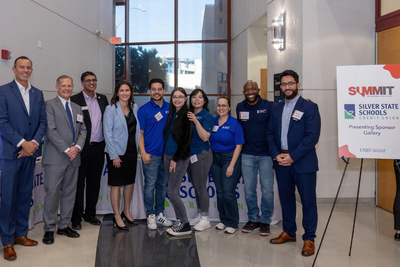
Hosted by the College of Education on Saturday, Feb. 7, this year’s gathering focused on embracing purpose, collaboration, and progress, particularly in advancing Nevada education and mental health.

From a welcome address by Dean Danica Hays to opening remarks by Interim President Chris Heavey, to a powerful keynote address by Lisa Hinkelman, the event provided a platform for education and mental health professionals, researchers, and community leaders to share perspectives and discuss student- and workforce-centered solutions.  

In case you missed it, here are some major highlights and takeaways. 

K-12 and Higher Ed Alignment Equals More Student Opportunities

A panel of heavy hitters, including two district superintendents, the state superintendent, and the state’s higher education chancellor, explored the state and future of education and mental health in Nevada. Moderated by Rocio Hernandez of The Nevada Independent, the discussion explored the need for more connection between grade levels and schools to drive progress. 

 “From the moment students enter school to the point they enter the workforce or return to education later in life, our systems have to work together,” said Nevada System of Higher Education Chancellor, Matt McNair. 

Strategies for a Future-ready Nevada Workforce

A breakout session, presented by Irene Bustamante Adams, Milt Stewart, and Xue Xing, focused on fostering the future of Nevada’s workforce through education. The speakers emphasized integrating apprenticeships and industry credentials into learning environments, building strong work-based learning partnerships, designing sector-based career pathways, and preparing learners for a fast-changing economy through AI literacy, adaptability, and human-centered skills. 

Honoring Lifelong Contributions

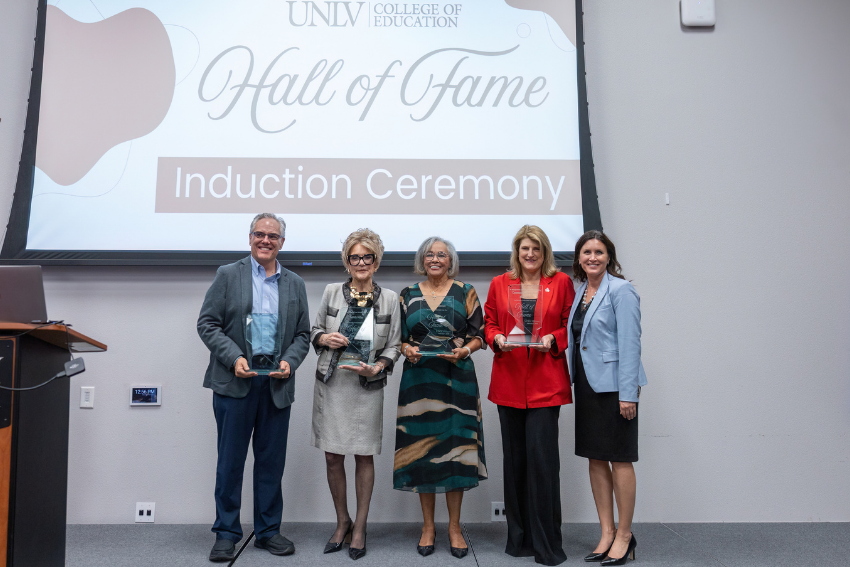
This year’s Summit attendees witnessed and celebrated the second UNLV College of Education’s Hall of Fame induction ceremony. The 2026 class inductees: Dale Erquiaga, Carolyn Reedom, Sandy Miller, and Communities In Schools of Nevada (CIS), were honored for their commitment to excellence and lasting contributions in education, mental health, policy leadership, workforce development, and service in Nevada.

“Celebrating local heroes was the most inspiring. It’s great to know there are so many people out there who care about the field!” Malvyn Barlaw, a CSSD teacher, shared. 

Change in Education Begins With Listening to Students

In her keynote address, Lisa Hinkelman, Founder and CEO of Ruling Our eXperiences (ROX) and author of Girls Without Limits, shared evidence-based strategies for supporting students, especially teenage girls, and creating empowering environments and experiences for them. It begins with listening. 

A Renewed Sense of Purpose

The 11th Annual Summit on Nevada Education closed with a shared sense of purpose and resolve for progress. Across every session, there was a common message: meaningful progress in education and mental health happens when communities listen, collaborate intentionally, and stay committed to purpose-driven action.

“I attend Summit to stay informed, and I often leave with insights I wouldn’t have gained otherwise. This year, I learned about the Inclusion Symposium, an opportunity I didn’t know about until now, and am eager to explore further,” said Ivette Guiterrez, a CSSD special education teacher. 

Educators, policymakers, mental health professionals, community partners and leaders left the Summit energized by new ideas, strengthened partnerships, and a collective vision for a Nevada where every learner is supported, not only academically, but socially, emotionally, and professionally.

As we look forward to next year’s Summit, the UNLV College of Education remains committed to championing innovative research, fostering strategic collaboration, and elevating the voices of students and educators across Nevada.

Alumni Spotlight: Leilani Shive ‘22

Originally posted: Jan. 2, 2026

By: COE Communications Staff

Name: Leilani Shive

Degree: ‘22 Ed.D. Executive Educational Leadership

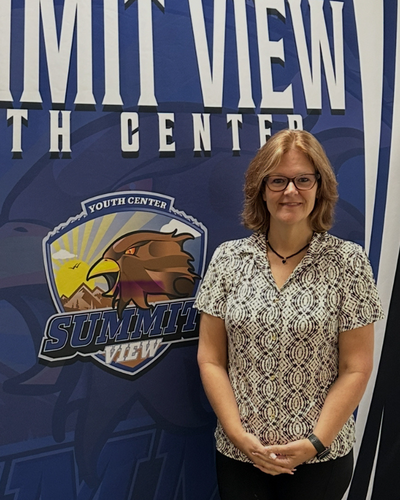
Current Employer: CCSD | Summit View Youth Center, Jean Conservation Camp Adult HS, and Florence McClure Women’s Correctional Center Adult HS

How did you help the educational programs that you’ve created in the alternative schools you work at?

I helped pass a Senate bill so that, even if you’re seventeen, you could get into the adult program, as long as you’d gone through four years of high school and didn’t graduate. Also, I testified for AB35, which was another one that I helped to bring the Internet to the adult prison system. We’re one of the only states that didn’t have the Internet in the adult prison system. Now, we do.

What are you most proud of from your UNLV experience?

I’m just proud that I accomplished my doctorate. That was always a goal. But it still feels unreal. My goal was to get it done by the time I was fifty. I walked across the stage on the nineteenth of December, and on the twentieth, I turned fifty in 2022. I was one day ahead of schedule.

How did UNLV prepare you for your career?

To be like, “Okay, I went from high school dropout to having a doctorate.” That’s what I always tell my kids, anything is possible. It’s not about where you finish. It’s about continuing. No matter what you get, whether you start with a GED or a high school diploma, you can still go to college. You can still be anything you want to be. UNLV has very much prepared me for that.

Are you a COE alum? Let us know what you’ve got going on by submitting a Class Note or getting involved!

Designing Success: First- and Second-Year Seminars Helping Students Thrive

Originally posted: Feb. 19, 2026

By: Kelsey Claus

“What’s your major?

“What are you interested in?

“What do you want to do?”

“Have you made friends?

For new UNLV students – whether they are in their first year or transferring – feel like these questions are on repeat. They just got here. How are they supposed to be sure of anything, let alone their major, career path, clubs, or friend groups? It’s easy to get overwhelmed. 

That’s where the college’s First-Year and Second-Year Seminar courses are helping students turn that uncertainty into opportunity.

At the heart of both courses, COE 103 and 202, is a simple but transformative idea: students design their own futures.

Learning to “Design My UNLV”

When Chelsie Hawkinson joined the program four years ago, she saw an opportunity to further develop the seminars into a more integrated and research-driven experience.

“When I got here, the classes were focused on things like debate and service learning,” she explains. “Those elements remain central. Since then we’ve worked to more intentionally connect students’ experiences throughout the semester.”

That’s where Life Design came in. Emphasizing empathy, reflection, collaboration, and learning through action, Life Design helps students make intentional decisions about their education, careers, and well-being. In the first-year seminar, that means asking questions like.“Who do I want to be at UNLV?” and “How do I make the most of my time here?”

Students explore a semester-long research question, What is the ideal college experience for me?, integrating scholarly research, structured reflection, and campus engagement.

“We’re teaching them how to thrive, not just survive,” Chelsie says. 

The impact shows. Nearly 94% of COE 103 students reported that the course helped them take responsibility for their growth, and 97% said it helped them value collaboration in shaping their career paths.

“Before the course, I felt like I was just trying to keep up,” said Teresa Juarez Serrano. “The Life Design activities helped me slow down and think about what I want my experience in college to look like, and actually writing it down helped me realize that I had more control over my time here than I thought.”

“The course definitely helped me take responsibility for my academic growth,” said Roman Reed. “You had to stay on top of readings and actually use campus resources. I didn’t think I needed the Writing Center as an English major, but it ended up really improving my writing.”

From Reflection to Real-World Readiness

By the time students reach the second-year seminar, COE 202, the focus shifts toward professional development and purpose. Here, Life Design becomes career-centered. Students explore pathways, conduct informational interviews, known as prototype conversations, and consider aligning their personal and professional aspirations with their strengths and values.

“It helped me build confidence in my own growth,” said Michael Lacaro. “Taking small steps made me feel more comfortable with why I’m here instead of doubting myself or thinking about dropping out.”

“Connecting my strengths and values to careers made me feel more confident about the path I already had, but it also helped me break things down into mini-goals—like getting my passport so I can study abroad or joining clubs that fit my career plans,” said Reed.

They also dive into Touchstones Discussions, a signature part of the course where students engage in weekly, guided conversations around short readings. The goal isn’t to win arguments. It’s to listen deeply, think critically, and build community.

“We found that, on these days, students  were more motivated and connected,” Chelsie says. “It teaches active listening and collaboration. Skills that carry into every other class.”

“Reed explained, “Hearing my peers open up made UNLV feel less like a distant institution and more like a community.”

“Our discussions were often about mental health or just getting through life,” said Juarez Serrano. “Hearing other students talk about that helped me feel less alone.” 

These findings aren’t just anecdotal. Data from the Office of Learning Analytics showed that students in discussion-based classes experienced higher engagement and stronger feelings of connection, which in turn enhanced their motivation and self-efficacy.

By teaching students to reflect, connect, and act with intention, the college’s First- and Second-Year Seminars are doing more than easing the transition to college–they’re helping students build the confidence and clarity to design a future that’s truly their own.

Alumni Spotlight: Christina Nishiyama ‘23

Originally posted: Feb. 12, 2026

By: COE Communications Staff

Name: Christina Nishiyama

Degree: ‘23 Ph.D. Learning Sciences

Current Employer: Professional Contactor Supply

What was your favorite and/or memorable moment you participated in while at UNLV? Why?

My whole life, I’d always wanted to attain my Ph.D., but life took a different course. My early applications were denied, so I started working in the corporate world, got married, had two daughters, and took a 20-year detour before starting at UNLV. The day I defended my dissertation was so emotional for me, because I’d waited for that moment for so long.

What was a fun and/or unique class you took at UNLV?

There was a class on Categorical and Non-Parametric Data Analysis. It was focused on analyzing small samples and non-metric data, which I used in most of my research. As challenging as it was, I still tell Dr. Michael Nussbaum, my advisor, that it was really useful. I still use those skills today in the corporate world.

What advice do you have for current UNLV students?

Enjoy it. UNLV is unique because it’s in a major city, but it still has that small-town feel where relationships really matter. We’re producing Tier 1 research, and there’s a lot of exciting work happening across the university. I’d encourage you to take advantage of every opportunity to build connections, be it internships, research labs, or activities that connect you to the broader city.

Are you a COE alum? Let us know what you’ve got going on by submitting a Class Note or getting involved!

Alumni Spotlight: Stephanie Hartzell ‘12

Originally posted: Dec. 5, 2025

By: COE Communications Staff

Name: Stephanie Hartzell

Degree: ‘12 Ph.D. Educational Psychology

Current Employer: Concordia University Texas

What was a fun class you took at UNLV?

My very first stats class. It was one of those courses that I had to take, and wanted to get it out of the way early. I just fell in love with it, which is weird because nobody else did, but I got it and understood it. I was like, “This is exciting.”

Do your students come out liking statistics?

I think that they come out with a greater appreciation for statistics. I teach doctoral students who are teachers or administrators now, so they use data in their daily lives. I try to give them tools that they can use to make better decisions, using the data that they already have.

What do you know now, that you wish you knew when you were a student?

I wish that I knew that my professors actually did want me to come to office hours to talk. They actually do want students to reach out if they have questions. I always think this is funny, because I’m a professor now, and the highlight of my day is when I get to talk to a student. That is always the highlight of my day.

Are you a COE alum? Let us know what you’ve got going on by submitting a Class Note or getting involved!

Wonderful Washoe Rebel | Fall 2025 | Winner Announcement

Originally posted: Dec. 3, 2025

By: Jenn Oshiro Rivers

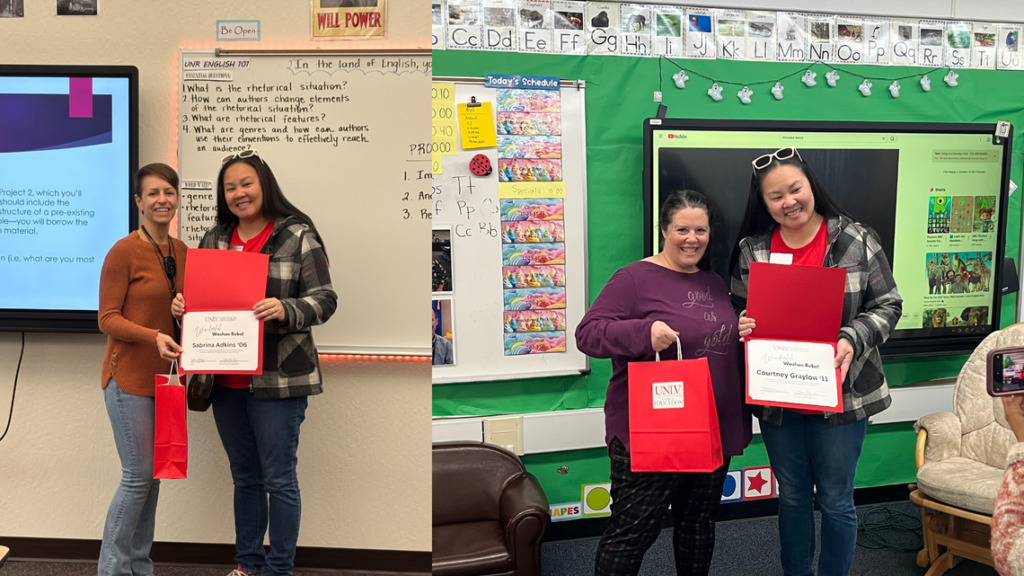
The UNLV College of Education is excited to announce the Fall 2025 Wonderful Washoe Rebel, alumna Sabrina Adkins. Sabrina is a 2006 graduate of the Secondary Education B.S.Ed. program, focusing on English Literature.

An English teacher at Damonte Ranch High School, Sabrina has been a part of the team focused on creating a well-rounded environment for her students to succeed. DRHS has integrated social-emotional learning in their day-to-day and curriculum.

Additionally, the College is proud to recognize Courtney Graylow, a Pre-K educator at Smithridge Elementary School. Courtney earned a masters degree in 2011 in Curriculum and Instruction.

If you know a UNLV College of Education alum living or working in Washoe County who deserves recognition, nominate them for the next award cycle.