The Council of Standards in Human Service Education, the national accrediting body for human services degree programs, recently approved the accreditation of UNLV’s bachelor’s degree in the field. According to the council, the program, housed within the College of Education, features a well-aligned, practice-focused curriculum, highly qualified and supportive faculty, and effective assessment processes that yield strong student outcomes and workforce readiness.
Counselor Education, School Psychology, and Human Services faculty have worked diligently to ensure the program’s high standards in curriculum, faculty, and fieldwork are preparing professionals for careers in social and human services
“This designation is an investment in our students’ professional credibility, and it confirms that UNLV’s human services program meets rigorous national standards,” says Tam Villar, the program coordinator.
The Council of Standards in Human Service Education, the national accrediting body for human services degree programs, recently approved the accreditation of UNLV’s bachelor’s degree in the field. According to the council, the program, housed within the College of Education, features a well-aligned, practice-focused curriculum, highly qualified and supportive faculty, and effective assessment processes that yield strong student outcomes and workforce readiness.
Here’s a subhead
Counselor Education, School Psychology, and Human Services faculty have worked diligently to ensure the program’s high standards in curriculum, faculty, and fieldwork are preparing professionals for careers in social and human services
“This designation is an investment in our students’ professional credibility, and it confirms that UNLV’s human services program meets rigorous national standards,” says Tam Villar, the program coordinator.
“My biggest motivation is to advocate for my community.”
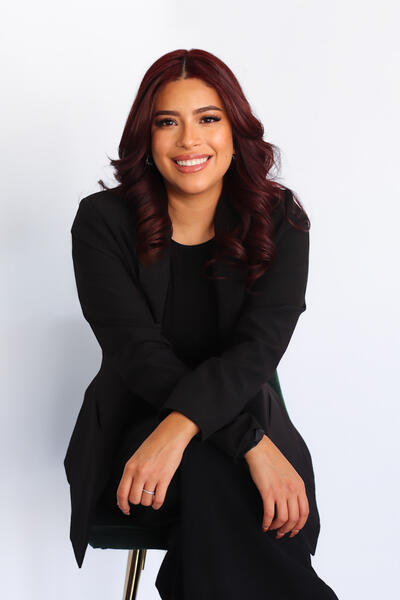
When fourteen-year-old Ivana Hernández first arrived from Honduras, she barely spoke English. Each school day felt harder than the last, but she was determined. By the end of high school, not only had she mastered the language, but she also graduated in the top 20 of her class. That triumph—born from persistence and community support—set her on a path to help students who also face invisible barriers in the classroom and the world.
A Citizen with an Immigrant Story
Born in Los Angeles to immigrant parents from Honduras, Ivana was only two months old when her family decided to move back to their home country. She grew up there without knowing she was a citizen until she was 14, and they migrated back and settled in Las Vegas.
“I didn’t know anything about the country and its culture, and it was challenging,” Ivana shared.
Ivana would eventually assimilate, but she still lacked a sense of belonging. This led her to co-found the student organization of Latinos at the Basic Academy of International Studies – her first step on the path of advocacy.
“We needed the community, and we took the initiative to create one for ourselves,” she stated.
Although she didn’t know it then, this would shape her decision to become a clinical mental health counselor, focusing on adolescents and Latinx English language learners.
Choosing Compassionate Care
Crediting her choice to pursue higher education to her participation in the Trio Upward Bound program, Ivana initially pursued pre-med at UNLV, but soon, she found herself craving more.
“I wanted to have a deeper connection with people.”
Ivana switched her major to psychology, but she still had no clear idea of her ideal career in behavioral healthcare.
A new direction came during the three years she worked as an Engelstad Scholar Intern at Volunteers in Medicine of Southern Nevada. There, her work focused on advocacy for the Latinx population. Thereafter, she had a full-circle moment working as an advisor with the TRIO Student Support Services program. In that role, she provided mentorship and academic guidance for first-generation students and high schoolers.
“That’s when I realized I want to work in my community, and I wanted to do this in a clinically informed way,” she said.
Seeking a holistic and multicultural approach to providing one-on-one care for adolescents and young adults, Ivana officially enrolled in the clinical mental health counseling master’s program while working as a coordinator at GEAR UP.
EXHALE: A Platform for Change
Ivana’s career journey took another defining turn when she got accepted into the inaugural cohort of the Expanding School-Based Mental Health Services Scholars program, also known as Project EXHALE. Since most of her professional experience has been in school-based settings, Ivana was excited for the opportunity.
“Ivana’s desire to learn more about school-based mental health, and her passion for serving clients and their families in Las Vegas, made her an excellent fit for the inaugural cohort,” said Heather Dahl-Jacinto, the Project EXHALE coordinator.
The new program is a partnership between UNLV, the Clark County School District (CCSD), and the City of Las Vegas. It creates a vital opportunity to increase access to mental health care for local students, particularly at the elementary (K–5) level, where early intervention lays the foundation for lifelong mental well-being and academic success.
“EXHALE builds a bridge for us as clinical mental health counselors to be able to work in school settings,” Ivana said.
By expanding and diversifying Nevada’s school-based mental health workforce, they are preparing future clinical mental health counselors to deliver trauma-informed, culturally responsive care to students and families. EXHALE scholars receive professional development training and advanced education in school-based mental health services. They would also complete internships in Ward 1 Schools, where they would provide mental health support to K-12 students.
“We’re providing support and resources that students would otherwise have to leave school to receive, often facing multiple barriers in the process,” Heather shared.
Vision for School Mental Health Counseling
For Ivana, providing advocacy-driven care transforms her resilience into purpose. Her long-term vision includes staying in Las Vegas and strengthening the mental health workforce in the Valley.
“I think one of the best things I can do is stay here and provide my services to the community,” she remarked.
Envisioning herself in the near future, Ivana hopes to provide her services in Spanish, help students find the resources and tools they need to succeed, and advocate for policies that make mental health care more accessible and culturally responsive. She also wants to inspire more students to enter the counseling profession.
“Teaching is one of the few jobs where you can just pick up your life and move it somewhere completely different,” Brian Kasper says.
And that’s just what this COE alum did: teaching in schools across the world, enduring unpaid salaries, starting a family, and gaining invaluable experience over 16 years.
His journey is proof that a teaching license and a willingness to say “yes” to the unknown can reshape one’s professional practice and worldview.
The Starting Point
At 18, Brian moved from Ohio to Iowa for his undergraduate studies in education. However, feeling disconnected from education, he transferred to Colorado State to study forestry.
After graduating, Brian worked for the U.S. Army and the U.S. Forest Service, conducting environmental research around the country. While Brian enjoyed the constant travel, what he loved most about his job was giving talks to school groups visiting Rocky Mountain National Park.
In those moments, Brian knew that teaching was what he really wanted to do.
Discovering International Teaching
Brian made his way to UNLV and earned a bachelor’s degree in elementary education in 2005. Soon after, he began teaching at Hollingsworth Elementary and discovered the possibility of teaching abroad.
“I was hired mid-year, and the teacher I was taking over from had taught in the Marshall Islands,” he recalls.
Without guidance, he searched for schools the hard way–googling country names and sending paper applications.
Of all his applications, only a school in Kuwait responded with a two-year contract offer. Although he knew nothing about the country, Brian jumped at the opportunity.
“That was part of the adventure. If I didn’t like it, I could just get on the plane and come back.”
Teaching Abroad: The Good, The Rough, and The Uncertain
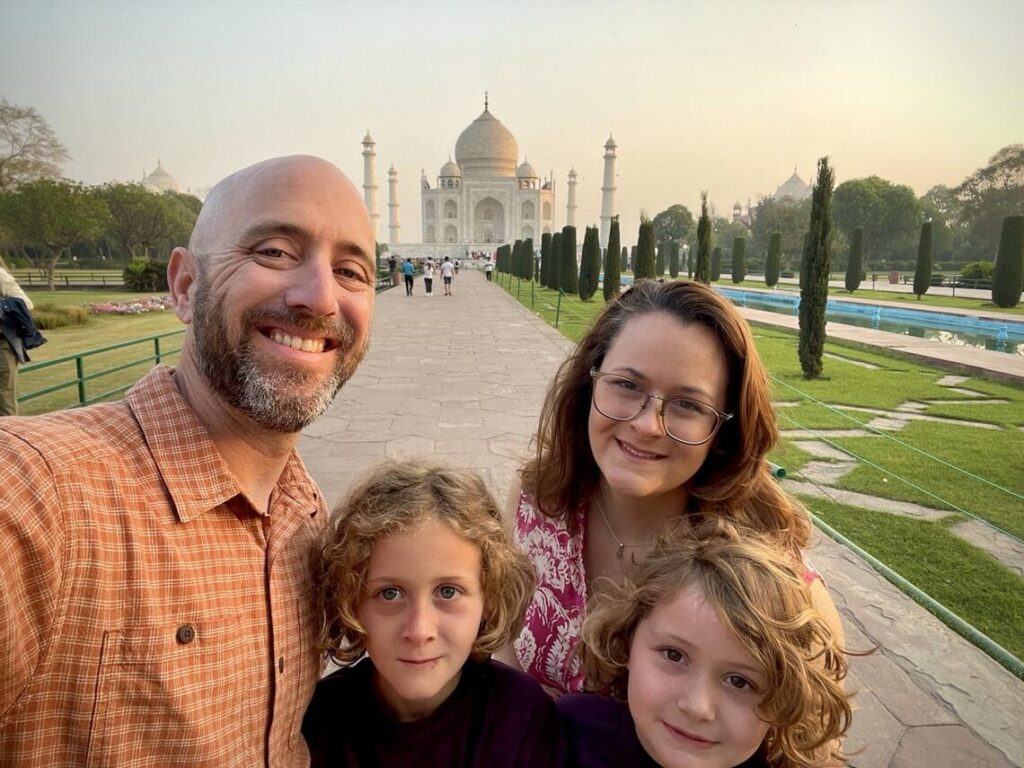
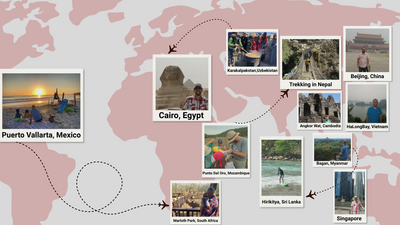
In his sixteen years, Brian taught in Kuwait, Vietnam, Mexico, Mozambique, China, and Uzbekistan. Along the way, he married a fellow teacher, had two children in two different countries, and learned some valuable lessons about how different countries perceive the value of education.
Across all of these countries, Brian saw what school meant to different families. While some parents worried that their children were not reading early, others viewed literacy as something that develops naturally over time.
“Coming from America, you find out that it’s not such a big deal in other places,” he says.
These contrasts taught him that learning does not follow a single universal path, and in the end, parents everywhere want their kids to have a meaningful education.
Of all the places he taught, Mozambique stands out as a favorite because it fit him professionally and personally. It was his first experience teaching the International Baccalaureate Primary Years Programme, which emphasized student choice and inquiry. The country was also especially welcoming to families.
However, not every experience was as positive. In Vietnam, Brian worked at a school where leadership instability created uncertainty, and paychecks arrived late. The experience taught him to look carefully at a school’s stability before accepting a position.
Ultimately, teaching across continents gave Brian a broader perspective on education and culture, and unique experiences like attending the Futsal World Cup in Tashkent, and visiting places he wouldn’t have been able to.
Building Relationships Across Cultures and Adapting
“Everyone knows everyone.”
Brian describes school communities abroad as “small worlds” where you work with the same colleagues every day, see students and their families at school and in social settings, and where administrators, teachers, parents, and students form connected circles.
These school communities are also spaces where cultures and identities intersect, and some celebrate this diversity through events such as International Day.
For Brian, living and working abroad means balancing teaching with the part-time job of navigating life in a new system.
“You have to be willing to learn local customs and avoid missteps that make you stand out, because you already stand out as a foreigner, “ he says.
Since returning to the US, Brian has experienced reverse culture shock, and he now finds ordinary things, like fully stocked grocery aisles, overwhelming after years in places with fewer choices.
Advice to Aspiring International Educators: Go For It
“It’s not as scary as it seems,” Brian says
To anyone considering teaching abroad, Brian’s advice is to be open-minded and adaptable. Schools typically support teachers with visas, flights, accommodations, and sometimes, professional development funds, which take care of many headaches.