Departments

Stepping Beyond Comfort: How Mentorship Transformed Izabella Silver’s College Experience

Originally posted: Sep. 14, 2023

By: Arianna Elias

In high school, Izabella Silver, or Izzy, was a shy student who preferred drawing quietly at her desk. Social interactions often made her uncomfortable, and the thought of standing in front of a classroom seemed impossible. However, driven by her aspiration to become a teacher, Izzy realized that stepping outside her comfort zone was crucial. With determination, she sought the support of the College of Education’s peer mentor program as a catalyst for her personal growth and professional development.

Like many first-year students, Izzy arrived at college expecting late-night studying sessions and frequent tests. She was also moving from California, so she was nervous, to say the least. Nonetheless, this shy wallflower was determined to break out of her comfort zone. Aware of Nevada’s low education ranking, she pursued her studies in education at UNLV, knowing that she could help improve the system.

Stepping beyond her comfort zone, Izzy knew she needed help. So she contacted the College of Education’s peer mentor program, PALS. PALS supports first and second-year students in their transition to college life. By connecting first-year students with current College of Education students, the program offers invaluable academic and social support, along with continuous guidance on how to thrive at UNLV. As an out-of-state freshman aspiring to become a teacher, PALS gave Izzy an extra push and enhanced her confidence. 

PALS support exceeded her expectations, helping her secure scholarship-supported housing, gain hands-on teaching experience, foster meaningful relationships, and, above all, develop a genuine sense of self. 

Transition and Self-Discovery at UNLV

“It’s kind of like my entire life stemmed from a Zoom call in 2021,” Izzy expressed as she reflected on when she was asked if she’d like to join PALS. During that call, Izzy was introduced to April Zangari, a first-year academic advisor and her former peer mentor. One of Izzy’s concerns about attending UNLV was housing, so she turned to April, who provided valuable help finding accommodation.

Thanks to April’s guidance, Izzy secured her space on a scholarship for three consecutive years in the residence halls. With the approval for the upcoming year, she has received an additional scholarship that covers the cost of moving into The Degree, an off-campus apartment.

For Izzy, the PALS program paved the way for significant self-discovery. Embracing her role as a mentor, she relishes the opportunity to form meaningful connections with her mentees while also gaining hands-on teaching experience, such as teaching students in the Saturday STEM Program at UNLV.

Many university students worry that the major they choose may not align with a career they love. Izzy was no different. “I was so nervous about going through four or five years of school to become a teacher. What if I hated it?” For her, becoming a mentor cemented her decision that teaching was her calling, and it still fuels her academic and personal motivation. 

Embracing Mentorship

The tables turned for Izzy in her second year, where she transformed from mentee to mentor. With seven first-year mentees under her wing, she held monthly meet-ups to assess their progress. While some attrition is normal in the program, Izzy managed to retain all seven mentees through their first year. She credits her creative touches to their meetings, including origami, coloring books, and tours of a campus art museum. While her mentees enjoyed a great experience, she was equally transformed by her mentor journey. She began to see mentees as individuals with unique needs and aspirations – a perspective she will carry throughout her career in the classroom. Rather than being a top-down advice-fest, her mentorship sessions became safe spaces where two friends were having an equal exchange. It changed everything.

One of Izzy’s mentees, Alana Poole, reflected on the challenges she faced during the program, which included experiencing various losses. Her local high school friend group relocated, and later, her entire family moved away from Southern Nevada. Alana confided in Izzy, sharing her struggles and fears. To Alana’s surprise and relief, Izzy consistently supported her by attending events together, even when she felt she had no one to rely on.

“Izzy inspired me so much because of how much she will do for you and anyone around her. It’s so amazing to watch and makes me want to do the same,” says Poole.

Peer Mentor Engagement Award

In May, Izzy was among the 2023 UNLV Peer Mentor Program Awards winners, where she received the Peer Mentor Engagement Award.

“Izzy won this award because of her consistent dedication to the PALS program and peer mentoring as a campus-wide initiative. Izzy has a smile on her face everywhere she goes, and she is always the first to raise her hand and volunteer,” explains Zangari. “When a staff or faculty member approaches me in the college regarding student representation, I know I can go to Izzy with confidence that she’ll represent us positively and proudly.” 

Advice for Prospective Peer Mentors

When asked to share some advice for students who are interested in joining a peer mentor program, Izzy has this to share: “You have no idea how many opportunities there are until you go and see for yourself. Get out of your comfort zone. As soon as I did, I found myself, and the worst thing that can happen is you realize you don’t like something, which is also really important.”
Southern NV Science Educators Rock Out in Summer Workshop

Originally posted: Sep. 19, 2022

By: Kia Cummings

High temperatures and rocky terrains were not a deterrent for the more than 25 dedicated science educators, administrators, geo-educational researchers, and geologists who trekked all over Southern Nevada in search of new ways to help their students understand more about the landscape they live in. 

Rock stars lead the way

Intrepid professors Tina Vo (Teaching & Learning) and Pamela Burnley (Geoscience) joined forces across college boundaries and cultivated GeoPath LEGENDS — a space where teachers could share their unique passion for earth science and expand their educator skillset. Having worked as a science educator early in her career, Vo “wanted to create a space where experts in teaching methods and experts in geoscience could meet and share their ideas.”

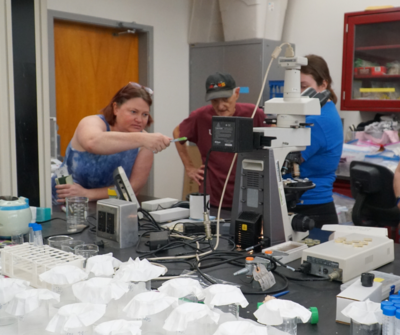
Vo and Burnley were joined by a team of UNLV geoscientists who enthusiastically shared their passion, research and insights into local geological phenomena. Over the course of five days, teachers ventured to various geological sites throughout the valley each morning (to beat the heat), then headed back to campus for lab tours, curriculum development workshops and more. 

Like a long hike in the outdoors, an educator’s career has more than its fair share of twists and  turns. So, taking an active role in sharpening content knowledge and teaching methods keep these community leaders sharp and their students engaged. Dr. Vo knows that the teachers she worked with over the summer continue to teach through trying times and thrive. “[Teachers] knew they and their students were incredibly capable and sought to provide their students with every opportunity. There is resilience in teacher efficacy, there is power in finding a community that can help you foster that. I hope our community can make it stronger while also supporting the teachers who are working to shore theirs up.” 

Teachers were provided with the time, space and resources to leverage local landscapes for their classroom with a unique emphasis on place-based learning that makes earth science more relevant for their students. Each afternoon, educators worked together to develop high-quality curriculum materials leveraging reform-based and inquiry-based teaching methods that promote interactive learning experiences.

Mining potential

Grateful for the generous funding from the National Science Foundation, Vo and Burnham look forward to its next phase – bringing high school students to UNLV’s campus to explore geoscience laboratories with undergraduate peer-mentors and encouraging them to consider geoscience-oriented career paths, whether directly in the field or as future science educators.  

Fall 2024 Wonderful Washoe Rebel

Originally posted: Sep. 26, 2024

By: Jenn Oshiro Rivers

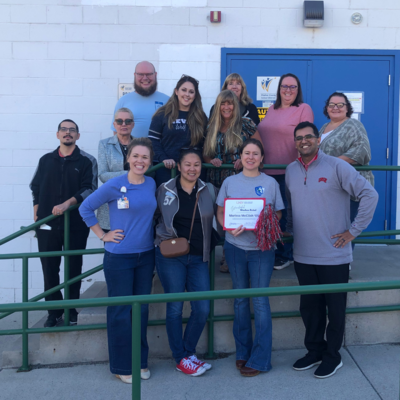
Congratulations to Marissa McClish ‘05 M.Ed. Curriculum & Instruction who was named the Fall 2024 Wonderful Washoe Rebel!

Marissa serves as the Professional Growth Systems Coordinator at Washoe County School District. She has been instrumental in opening teacher pathways in Northern Nevada, including the Nevada Forward Apprenticeship Program through UNLV’s College of Education.

Marissa’s nominator shared, “Her work not only opens doors to higher education and licensure pathways but also creates opportunities for community members to take on leadership roles that make a real impact across the state.”

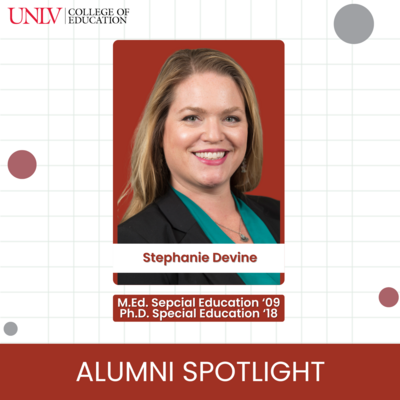
Alumni Spotlight: Stephanie Devine ‘09 ‘18

Originally posted: Sep. 27, 2024

By: COE Communications Staff

Name: Stephanie Devine

Degrees: Class of 2009 M.Ed. Special Education, Class of 2018 Ph.D. Special Education

Current Role: Associate Professor of Special Education at Georgia Southern University

Why did you choose UNLV? What led you to pursue a degree in education/human services?

Choosing UNLV was the most convenient for me because my family was already living here.  I chose to get my degree in special education due to my passion for helping children and adults with intellectual disability.

What advice do you have for current UNLV students?

Don’t be afraid to talk to your professors. Attend their office hours. Make sure you get to know them. Getting to know you encourages them to help you out even more when you ask. Also, do your work!

Why should alumni stay engaged at UNLV?

It’s a great way to network and stay connected with other professionals. It’s also a good way to get inspired or inspire others. Hearing other people’s stories and their accomplishments is a great reminder of why she joined the education field, and it’s a great way to show that there is so much more to education aside from teaching. There’s so much more you can do with an education degree.


Are you a COE alum? Let us know what you’ve got going on by submitting a Class Note or getting involved!

A Journey of Discovery and Cultural Immersion

Originally posted: Sep. 6, 2023

By: COE Communications Staff

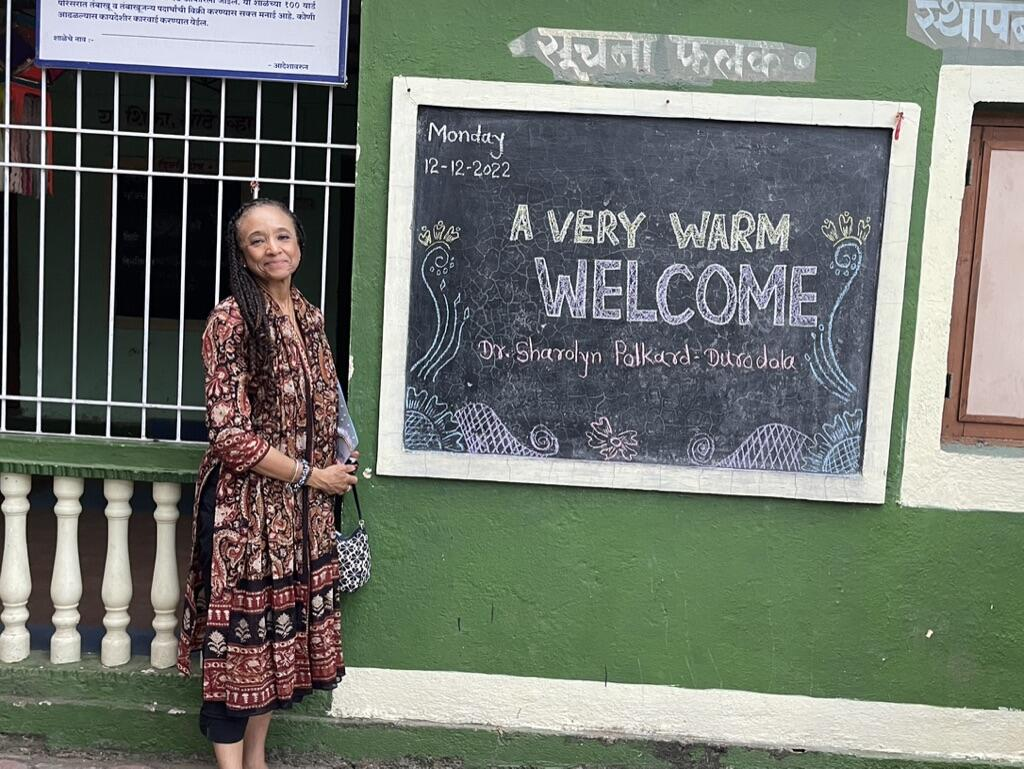
Dr. Sharolyn D. Pollard-Durodola, researcher, professor, and multilingual education expert, traveled to India last fall and returned transformed.

Her mission? To explore the intersection of history, policy and the experiences of Indian educational communities as they pursue multilingualism. Supported by a Fulbright-Nehru Academic and Professional Excellence award, she immersed herself in a new culture uniquely marked by multilingualism and the pursuit to promote it in the early years of formal education.

Over the course of four months, she expanded not only her understanding of the country’s educational landscape but also her sense of self.

Early Inspiration

Sharolyn’s affinity for language learning began long before her sabbatical. Her father, hailing from Texas, traveled between the U.S. and Mexico often. She fondly remembers him owning a Spanish language book that captured her curiosity. “I was always intrigued by the differences in the language and tried to figure out what things meant.” Naturally, when the time came to pick her college major, she chose Spanish and Portuguese.

As a college student, she learned that language acquisition is so much more than being able to translate, write, and speak a new language. She was taught that “If you want to understand people, you have to learn their language.” Even simple knowledge of a language can help us understand the philosophy behind people who speak it. “This concept has been really important in my life,” she shared. “It frames how I understand people, especially people who are different from me.” Sharolyn would later focus her studies on language use within the African diaspora and the consistent political role that language played in colonialism.

Understanding Diverse Cultures, People, and Perspectives

India represents one of the oldest civilizations in the world featuring a diversity of religions, languages, and regions. With over 122 languages, alongside the 22 officially recognized languages, multilingualism is lived out in multi-generational households where children are exposed to several languages before they begin school.

Sharolyn began to see that when a country’s culture places importance on familial linguistic diversity, multilingualism tends to thrive – which is in contrast to the preference for monolingualism embedded in U.S. school systems.

English as a Symbol of Status

During her sabbatical, Sharolyn came to understand that English proficiency for some Indian students was more about perception and status than fluency. On a few occasions, her interview participants would claim they spoke English, using it in their daily and professional lives. However, once in the actual interview or during a school visit, it became clear that the individuals may have had word recognition skills but were not as fluent as they claimed to be.

While under British rule for nearly a century, Indians were introduced to English during colonization as a strategy by the crown to unify the country under one language. English would become associated with intelligence, while mother tongues and vernacular Indian languages were associated with inferiority – which explains when some claim they speak English when they do not. 

Building Bridges Across Languages

These values and beliefs are reflected in the language education expectations in India. Indian schools vary in their language teaching methods and goals. Some vernacular medium schools teach all subjects in the local language, while Semi-English schools use English as a gateway to universal subjects, which can sometimes lead to limited English communication skills. English Medium schools teach all subjects in English. Often the goal for Indian students is not necessarily to communicate proficiently in English, which has become a national concern due to the global dominance of the language.

Sharolyn was moved by dedicated teachers in a Semi-English school who created stimulating multilingual learning environments for migrant students from underserved villages. With classrooms full of students speaking at least 10 vernacular languages or dialects each, the teachers prepared bilingual dictionaries to help children connect and learn across languages.

Championing Linguistic Diversity and Personal Growth

Dr. Pollard-Durodola expressed her gratitude for the invaluable experiences and personal growth she gained during her sabbatical in India. She knows her research findings will inform her future work, shaping educational policies and practices that will empower emergent bilingual students. Her commitment to personal growth, advancing educational equity, and a deep respect for local culture, traditions, and practices will serve her well. 

Her sabbatical research in India was an expression not just of her career, but her philosophy of being and living in the world. Now, back at UNLV, she’ll continue to unravel the challenges and misconceptions surrounding emergent bilinguals and identify potential solutions that could benefit students around the world.

LEARNING THROUGH LANGUAGE: Dunn Community Talks foster key discussions on multilingual learning

Originally posted: Jun. 9, 2025

By: Sakinah Musa

Impactful ideas grow from meaningful conversations. Since last year, the Dunn Community Talks have sparked much-needed dialogues on assessment in multilingual education, creating a lasting impact thanks to the vision and generosity of the Dunn Family Foundation. 

With a focus on addressing assessment concerns in multilingual education across various disciplines, the Dunn Community Talks provide an avenue for educators, researchers, administrators, practitioners, families, and community stakeholders to increase their understanding and build skills to apply knowledge related to multilingual populations in their respective settings. 

Why Assessment in Multilingual Education Matters

“Assessment in multilingual education is crucial because it allows educators to validate identity while testing knowledge,” said  Sharolyn Pollard-Durodola, the Dunn Endowed Chair for Educational Assessment and host of the Dunn Community Talks.  

The choice of topics and selection of expert speakers from across the country highlights the different perspectives from which assessment in multilingual education can be explored. The first two talks hosted in 2024 raised awareness on the best practices for supporting young multilingual learners in early childhood education and the assessment challenges for this population. They also explored how multilingual learners with special needs can be supported, particularly those struggling in reading, science, and social studies.

This year, the talks delved into numerous sides of assessment in multilingual education, from reading assessment for multilingual learners with learning disabilities to the three pillars of developing a multicultural orientation, and lastly, navigating multilingualism in early childhood leadership. 

Combined, the talks have garnered excellent feedback from the participants.

Insights With Lifelong Impact

“As an educator, I believe it is essential to be a lifelong learner,” said Wendy Reyes, a regular participant at the Dunn Community Talks and a Counselor for the Clark County School District (CCSD). 

“Staying informed about current research and best practices allows us to bring up-to-date knowledge to our students and support their success in meaningful ways,” she added.

For Wendy,  the lessons from the series resulted in better connections with families and students. Hearing directly from professionals in the field and community members helps her stay grounded in the realities that families of multilingual learners face, while also strengthening her ability to advocate for her students’ needs. 

The Bedrock of The Series

The Dunn Family Foundation has been supporting UNLV since 2016, focusing on programs that use education to develop a better society and devise innovative ways in which testing and support materials can contribute to educational initiatives. 

The foundation reflects the values of founders Lloyd and Leota Dunn and their son, Douglas Dunn, who now oversees the organization. The Dunn family has been a long-time champion of lifelong learning. Education drives progress in society, and practical assessment and teacher support materials improve educational outcomes. 

By financially supporting the Dunn Family Chair in Educational Assessment, the series continues to grow its reach and deepen its impact on Southern Nevada educators. It also creates a consistent space to include national experts in community-focused conversations. 

What’s Next? 

“I want to maintain an interdisciplinary approach because there are different perspectives from which assessment in multilingual education can be viewed,” Sharolyn said.

An interdisciplinary lens guides the series, fostering intellectual curiosity and growth within and across disciplines. With the success of the Dunn Community Talks, it is clear that the series is becoming a part of not just the College of Education, but UNLV and the greater Southern Nevada community. It is also clear that when supported, conversations like these hold lifelong value. 

The Power of Project-Based Learning: How Alum Mike Taack is Transforming Learning With WYLEES

Originally posted: Sep. 30, 2025

By: Sakinah Musa

“Is this even important?” “Why do I need to learn this?”

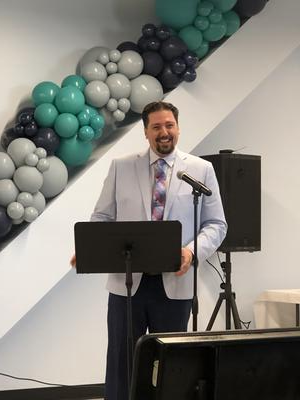
As a middle school educator for over 15 years, Mike Taack, ‘11 M.Ed. Secondary Curriculum and Instruction, had heard those questions from his students more times than he could count, so much so that he sought and found a solution in project-based learning. 

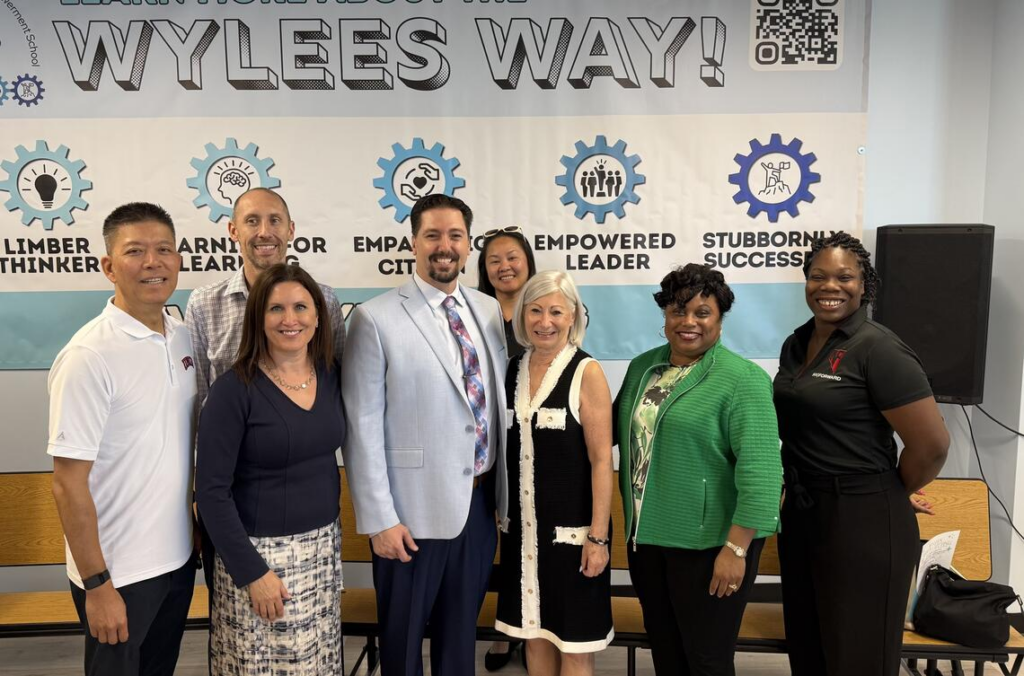
By connecting teaching approaches to students’ interests, Mike helped his students deepen their drive for learning. And now, he is replicating it on a larger scale, as the founder and Head of School of WYLEES, a newly opened, tuition-free charter middle school in a Las Vegas shopping mall.   

Project-based Learning in Action

Short for Western Youth Leadership, Engagement, and Empowerment Middle School, WYLEES is a public charter school that uses personal learning goals and civic engagement to build students’ academic and creative skills.

The decision to start with middle school stems from seeing too many middle-grade students check out mentally from school. 

“We have a unique opportunity to help the students continue their excitement for learning from elementary to high school and beyond,” Mike said.

For the first year, the students are introduced to project-based learning and why it works. Unlike traditional learning, which emphasizes direct instruction, project-based learning immerses students in hands-on problem-solving. For instance, rather than simply read about ecosystems, the students at WYLEES can create and maintain a community garden that teaches science and civic responsibility at the same time. 

“We want students to learn about issues in the community, and be able to take action to raise awareness and solve those problems.”  

Where the Vision Began

Mike’s call to education came a little later in his career. After earning his bachelor’s in English, he worked in insurance for a while.. He found a way back to his dreams through the graduate alternate route to licensure program.

He started as a student teacher at Fremont Middle School and stayed there as a magnet school theme coordinator. Those experiences reinforced the importance of mentor teachers, which grew into the idea of building a school that thrives on innovations. Mike also credits the long-standing relationships with some of his teachers, like Professor Shaoan Zhang, who is also on the school’s board of directors, as an inspiration. 

“Having those connections helped me to be a successful student, and I wanted to give back all the support I had gotten,’ Mike recalled.

From Dreams to Brick and Mortar 

The journey to founding WYLEES was long and arduous, but Mike persisted. From writing and submitting a 188-page-long plan to get state approval for the school on his first attempt, to raising over $2 million in grant funding, Mike’s dream soon became a reality. 

But he couldn’t have done it alone. 

With years of experience as an assistant principal at Girls Empowerment Middle School, long-term preparation aided by educational leadership-focused fellowships through organizations like Opportunity 180, and support from the connections he made during his graduate studies at UNLV, Mike navigated the path to founding a school. 

This fall, WYLEES welcomed its first class of future innovators at an unconventional location– a converted Macy’s store in Boulevard Mall. 

Empowering Families and Strengthening Community

A Las Vegas native and the proud father of three boys, Mike sees the school as both a professional and personal passion. Growing up with his immigrant great-grandmother and being a first-generation college student, he recognizes that his struggles are mirrored in the students the school serves, a fact that ensures his work is rooted in community.  

“Mike is passionate about empowering students and families to co-create meaningful, real-world experiences,” Dr. Zhang commented. 

At WYLEES, families actively participate in their children’s education, working with the teachers to ensure each family’s needs are met. This collaboration also extends to the broader community through partnerships, one of which is with the UNLV College of Education as a professional development school. This partnership offers mutual benefits, including teacher training and evaluation, clinical placements, field experiences aligned with the project-based learning model, and applied research to strengthen the model. 

What the Future Holds

For Mike, founding a middle school in the heart of his community is only the beginning. He hopes to expand into high school in five years, collaborate with more community partners, and inspire students from all backgrounds to pursue educational careers. 

What began as a dream has become a reimagined, breathing space where students are at the center of learning. 

From Lunch Lady to Future Teacher: How Karen Cantrell is Building Her Career in Elko

Originally posted: Sep. 30, 2025

By: Kelsey Claus

For Karen Cantrell, Mountain View Elementary isn’t just where she works—it’s where her dreams are taking shape. A lifelong Elko resident, she’s been part of the school community for more than a decade, first as a lunch lady and now as a paraprofessional supporting kindergarten through second grade special education students. Today, she’s also a student, working toward her teaching degree through UNLV’s Nevada Forward™ apprenticeship program.

What makes this journey possible, Karen says, is the program’s built-in support and the rare opportunity to pursue a teaching degree without leaving Elko.

Karen shared. “My family’s here, my kids go to school here. Being able to stay rooted in my community while moving forward in my career has made all the difference.”

This is Karen’s first time navigating college. Fortunately, the program’s structured mentorship and consistent support have smoothed the path. Her mentor, an experienced educator, checks in regularly, answers questions, and provides encouragement that helps Karen stay confident.

Then she saw the joy on a student’s face after mastering a difficult concept, she knew she needed to do more to help children learn and grow. With her sights set on teaching kindergarten or second grade, she hopes to inspire students in her community.

She also sees her journey as part of the bigger picture: helping address Nevada’s teacher shortage. “To be helping solve the teacher shortage here in Elko County is personal,” she said. “I’ve had a few great teachers come from here, and to be part of that solution feels great.”

For aspiring teachers considering the apprenticeship program, Karen’s advice is simple: “Just do it. You have so much support, and it’s truly a win-win.”

From serving lunches to preparing lesson plans, Karen proves that with the right support and opportunities close to home, a new generation of teachers can grow right where they’re planted.

Alumni Spotlight: Annie Macias ‘12

Originally posted: Sep. 29, 2025

By: COE Communications Staff

Name: Annie Macias

Degree: ‘12 Ph.D. Educational Leadership

Current Employer: California State University San Marcos

What are your favorite memories from UNLV?

One of my favorite moments is when I met some of the folks from my cohort. We almost became like each other’s families away from family. We had potlucks at my house. We had New Year’s parties at my house. I’m happy to say, I’m still in contact with all of them.

Have you served as a mentor to any of your staff or students?

I have served as a mentor, and I’m honored to still be serving as a mentor for some students. Not because I went in to become a mentor, but I think because they see me as someone who has had a successful career, who cares about people.

What’s a fun fact about you?

I became a Southern Nevada Master Gardener because I wanted to learn how to grow plants in Nevada since it’s a desert. I still have a collection of succulent plants. There’s a group of gardening ladies that I’ll get together with and we trade plants. You bring plants from your collection, they bring their plants. I have a green thumb, and I’m really good at growing plants.

Are you a COE alum? Let us know what you’ve got going on by submitting a Class Note or getting involved!

Success Adds Up: Speer Fellowship Recipients Proof of Commitment to Math Learning

Originally posted: Sep. 23, 2025

By: Sakinah Musa

Who would have expected that a summer in Ohio could change your life? 

When Bill Speer went to Ohio for the National Science Foundation summer program in 1973, he had no idea his life was about to change. If it weren’t for that experience, he would have retired 20 years ago as a career high school mathematics teacher. 

He also wouldn’t have crossed paths with James Hedden, the Kent State professor who was seeking students for a fully-funded doctoral degree in math education. They wouldn’t have founded the Research Council on Math Learning (RCML) 53 years ago. He wouldn’t have gone on to become an emeritus professor at Bowling Green State University for nearly 25 years. And he would have certainly missed out on a 27-year run at UNLV as the interim dean of the College of Education and the director of the UNLV Math Learning Center, before retiring in 2022. 

Most of all, the William R. and Marjorie A. Speer Graduate Fellowship wouldn’t exist. 

Providing a Springboard for Students

William Speer’s vision for sponsoring the fellowship is simple. 

“If I want to promote what I have valued my entire life, I want to do it through scholarships like this,”  he shared.

For Bill, it has always been about mathematics. Fascinated by rational thinking that solves problems and uncovers mysteries, he switched his undergraduate major from accounting to mathematics. He eventually earned graduate degrees in mathematics and math education, which launched him on a decades-long journey in academia at the Colleges of Science and Education at Bowling Green State and UNLV. 

To honor the beautiful connection between the two colleges and the life of the high school sweetheart who stood with him through it all, he decided to set up the William R. and Marjorie A. Speer Graduate Fellowship award.

Through this award, the UNLV College of Education awards two graduate students pursuing a master’s or doctoral degree, focusing on mathematics education, with one-year fellowships each year. Likewise, two graduate students in the College of Science’s department of Mathematical Sciences receive the same.   

“Having a fellowship allows you to go through a doorway that may be difficult for you otherwise,” William added. 

He hopes the Speer Fellowship award can do the same for students, just as someone provided him with rich opportunities through the random yet life-changing, fully-funded Ph.D. offer he got at the summer program in Ohio. 

And it is.

A Kick of Motivation

Last summer,  Amy Mathis-Leonard and Sinead Pelleschi received emails notifying them that they had been selected for the maiden cycle of the Speer Fellowship award for the 2024-2025 academic year. 

“The fellowship provided me with essential financial support and the opportunity to present at the RCML Conference in Texas,” Sinead shared.

For Amy, a Gateway Math Placement coordinator, it was more than financial relief. 

“It came at a time when I was deep in the stress of researching and writing my dissertation proposal,” says Amy. “It gave me a kick of motivation that reminded me of my passion for mathematics education.”

In that time, Amy completed the required coursework for her doctoral program, passed her qualifying exam, and submitted her dissertation proposal. She hopes to complete her dissertation in Spring 2026 and earn a Ph.D. in Curriculum and Instruction, specializing in mathematics education. 

Access for all

When third-year Ph.D. Curriculum and Instruction student and part-time UNLV instructor, Gabriela Zuniga, received her award notification for this academic year, and she felt seen. 

“Initiatives like this fellowship allow diverse students to be heard and thrive within academia, further enriching the academic field with their voices and experiences.” 

Gabriela began her doctoral journey in the college’s Cultural Studies, International Education, and Multicultural Education program, which rooted her academic and professional career in equity-centered mathematics education. 

“I hope to pay this forward by providing guidance, access, support, and opportunities for diverse students.”

The Gift of Time

Leonardo Martinez, the second recipient of this year’s fellowship, wears many hats. In addition to his doctoral program, he teaches at Will Beckley Elementary, a Title I school, while juggling a side gig with Uber and parenthood. 

“Time is incredibly scarce for me as a single parent trying to make ends meet. This award alleviates my financial burden and allows me to be more present as a parent and an educator.” 

Leonardo plans to follow up his doctoral program with a postdoctoral fellowship to continue his research on game-based learning and its impact on student engagement and math fluency.

When Recognition Opens Doors

The Speer Graduate Fellowship award is more than financial aid. For these scholars, it has proven to be a turning point that has helped them realign and reaffirm their commitment to advancing their careers and changing the world around them. This is the real impact of recognizing and investing in students committed to a demanding and challenging academic subject.  

None of these students met Bill during his time at UNLV. Still, the ripple of his legacy and this award carries forward by helping them and future recipients succeed in and shape the future of math education.