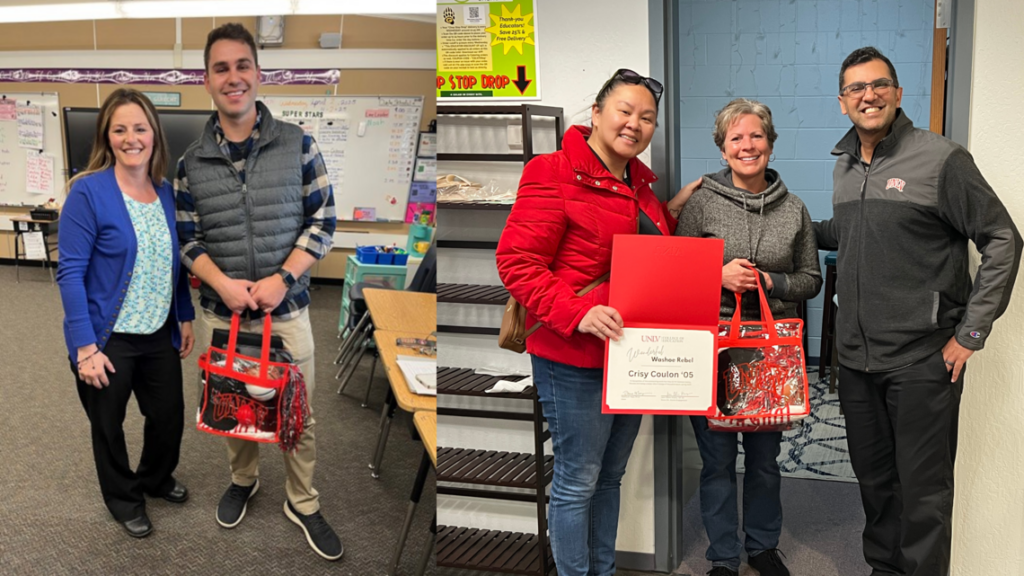
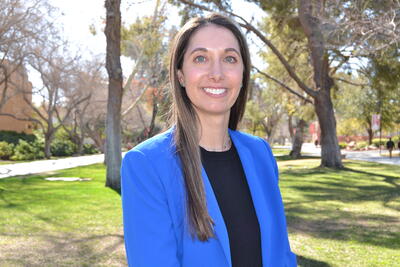
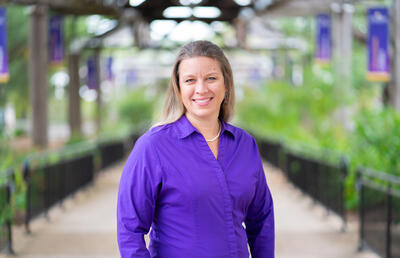
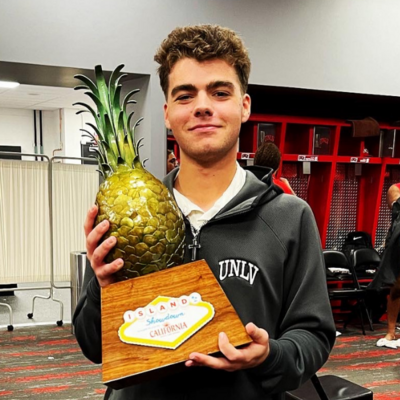
The UNLV College of Education is proud to announce the Spring 2025 Wonderful Washoe Rebel recipient, alumna Crisy Coulon ‘05 Ed.S. Educational Psychology.
Crisy currently serves as a Psychologist for Washoe County School District working with schools including Sparks and Galena high schools. She brought Hope Squad to Sparks HS, a peer-to-peer suicide prevention program.
Her nominator shared, “Crisy goes above and beyond to help and serve others in our community. She is very humble and does not brag about all of her accomplishments and contributions. She also is a very VERY proud UNLV graduate.”
Additionally, the College is excited to recognize Mark Farthing ‘24 M.A.T. Elementary Education as an honorable mention. Mark is a fifth grade teacher at Towles Elementary School in Reno and has made an impact in and out of the classroom. His nominator shared, “He cares so much about his students and their success and goes above and beyond to build and maintain relationships with students and their families. He participates in our home visit program and regularly supports his students outside of school.”
If you know a UNLV College of Education alum living or working in Washoe County who deserves recognition, nominate them for the next award cycle.
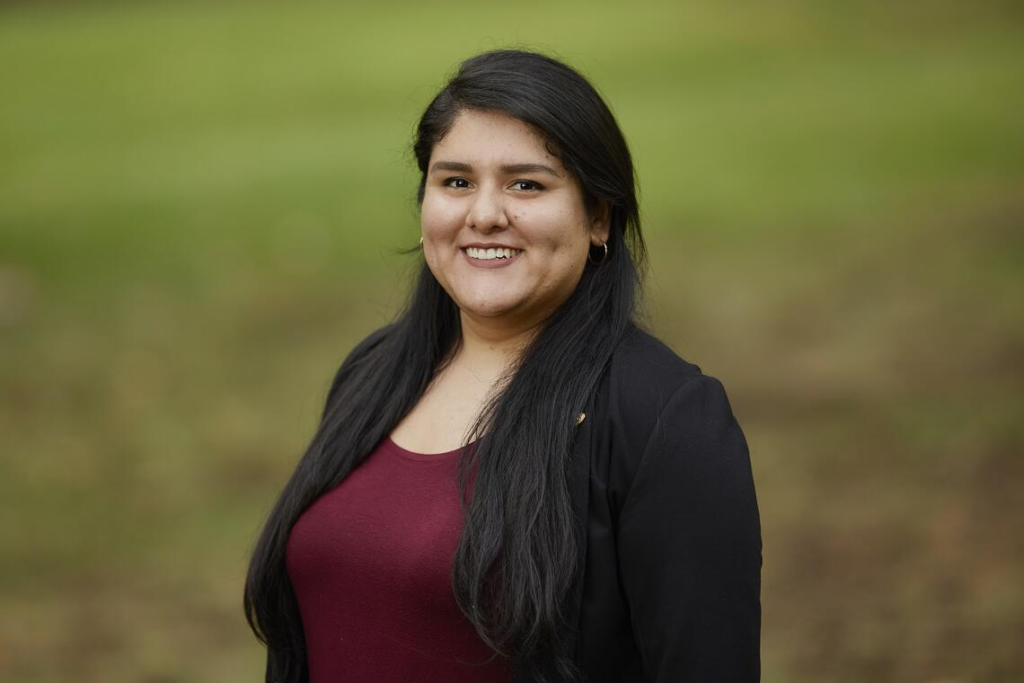
“I would have never completed a master’s or a Ph.D. had it not been for scholarships and graduate assistantships.” Elizabeth León Zaragoza, two-time UNLV graduate, didn’t beat around the bush when explaining the role funding played in her academic journey.
By the time Elizabeth got to UNLV, she was eager to find a solution to two persistent challenges: how to make athletic training education more inclusive and how to use skills from athletic training to serve non-athlete members in the community. The barriers she uncovered and experienced firsthand were significant.
Raising the Bar
Two years into her undergraduate degree in athletic training at Eastern Kentucky University, the industry’s professional certification organization announced a major change. Going forward, anyone entering the field would need a master’s degree to operate as trainers and undergraduate athletic training programs were to be phased out. The decision, aimed to align athletic training with other health professions, raised concerns for Elizabeth. “It looks good on paper,” she says, “but it’s a moving target for students, especially those from low-income backgrounds. Scholarships and graduate assistantships made it possible for me to meet those demands, but I know many others aren’t as fortunate.”
Sharing Knowledge. Saving Lives.
The second obstacle she looked to overcome hit closer to home. As a daughter of immigrant farm workers she recognized how her unique skill set could serve a population near and dear to her. “One of my uncles died while working in the fields,” Elizabeth shared. Knowing the difference she could make, she began working to find ways to support black and brown people, especially those in rural areas—helping them to develop life saving CPR and first aid skills. “Preventing heat exhaustion and cardiac death is a lot of what we face as athletic trainers. I’m in a unique position to teach these skills and improve outcomes for survivors.” she explained.
Elizabeth’s game plan was coming together and, with the encouragement of Dr. Nancy Lough, she got to work on a higher education Ph.D. She sought out ways to diversify the playing field. Her research zeroed in on access to health care in athletic training, particularly for populations from rural and low socioeconomic backgrounds. “In supporting athletes, we’re often supporting people from underserved communities.” she explained. “I wanted to pursue a line of research that would help me to provide solutions for how athletic trainers as healthcare providers could do better outside of sports.”
Investment Drives Success.
Elizabeth also acknowledges that the generosity of donors and mentors can sometimes feel daunting. As a Holmes Scholar and multiple award winner she knew that “when someone invests in your dreams, there’s immense pressure to perform.” But that’s what scholarships are for—to help students fulfill their dreams. “Hopefully, your dreams include giving back to your community and helping others,” she continued.
Today, Elizabeth serves as an assistant professor of athletic training for the Human Biology Department at the University of Wisconsin-Green Bay and is committed to paying it forward. Beyond the classroom, her research continues to address the disparities and downfalls she has witnessed firsthand. One project is specifically working to train farmworkers in CPR and first aid skills that are often inaccessible to communities in remote areas.
Her advice for current and future scholarship recipients is simple: “There’s no gatekeeping here. Share opportunities. Lend a hand. Build a better academic environment for everyone.” Elizabeth’s own journey is a testament to what’s possible when generosity meets determination. Through her teaching, research, and advocacy, she’s ensuring that the next generation of athletic trainers is more diverse, compassionate, and prepared to serve.
Earlier this month, College of Education students gathered for a long-awaited student mixer – a casual, no-pressure event designed to help students connect, get involved, and find their place beyond the classroom.
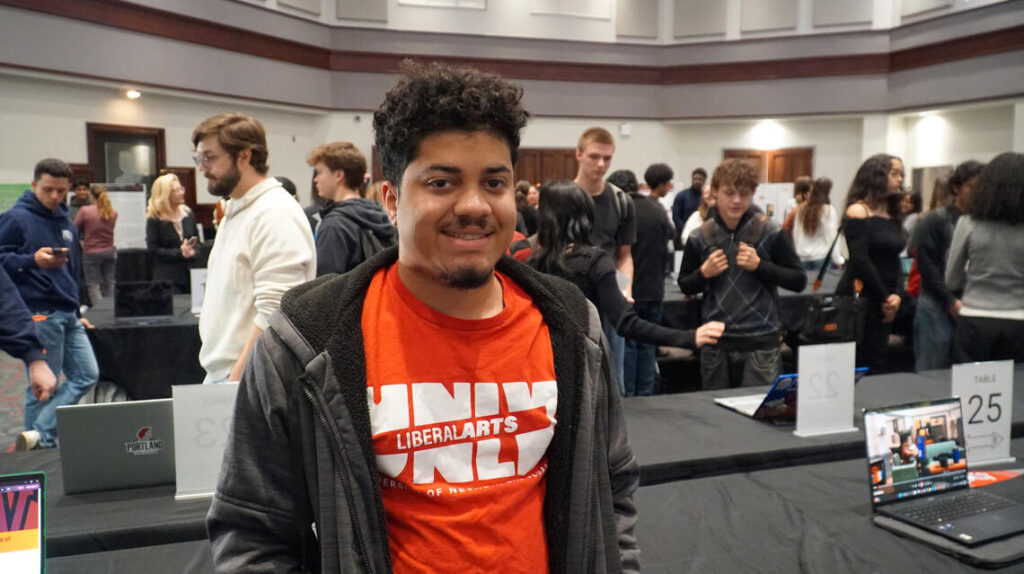
If you missed it, have no fear. You’ve got an “in” with Melvin Taylor, a human services major, veteran, and CSUN senator who believes one thing above all else: students thrive when they feel connected.
Why Connection Matters
Taking a page from Melvin’s lived experiences, students who are connected feel supported, and are more likely to persist and succeed.
“When I was successful at the community college, it was because I was involved,” Melvin said. “I had staff, faculty, and club members around me who supported me.”
If you want to get involved, the college community is home to many organizations, including:
The college’s ambassadors
PALS mentors
Tau Upsilon Alpha (the national organization for human services majors)
The Student Organization of Addiction Professionals
Chi Sigma Iota (Counseling Academic and Professional Honor Society)
And more
Planning on a teaching career? Sign up for Rebel Educators and build your community within the College of Education and across UNLV. It’s a great way to build your leadership and organizational management skills.
The Man Behind the Push
A non-traditional student and long-time Vegas resident, Melvin brings years of leadership experience to his role as COE’s CSUN Senator.
After completing his service as a yeoman in the U.S. Navy, Melvin returned to school, supported by the Veterans Affairs Veteran Readiness and Employment (VR&E) program, with a renewed sense of purpose and a clear goal: to develop professional skills that would enable him to serve others, particularly veterans navigating life after service.
A goal that ultimately led him to pursue a bachelor’s degree in human services.
As if tackling the academic challenges of college life wasn’t enough, Melvin built on his experience as the San Diego City College student government president. Not long after his conversion to Rebel status, he began attending CSUN meetings and realized something was missing.
“For about two semesters, I watched the meetings and saw that our college didn’t have a seat at the table,” he said. “When elections came around, and that seat was still empty, I decided to run.”
Today, his priorities include ensuring consistent representation for the college’s students. He’s also advocating for grants and scholarships, particularly for freshmen and sophomores, and encouraging his fellow Rebels to get involved with organizations, clubs, and events within the college and throughout the university.
More Than a Role
Outside of academics and student advocacy, Melvin is a grandfather of nine. He loves dancing, enjoys live music, and has even met two U.S. presidents, Barack Obama and Bill Clinton. He also serves as the Special Projects Officer for the Rebel Vets Organization.
Get Connected
Above all, Melvin wants students of the College of Education to know they’re not alone.
“We’re here to support you and help make life more manageable while you’re here,” he said. “There’s always something happening on campus—sometimes you just need someone to help you find it.
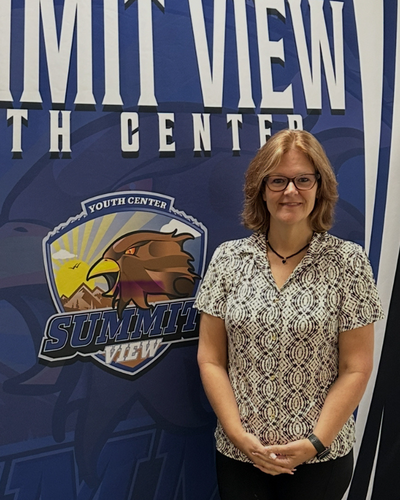
Current Employer: CCSD | Summit View Youth Center, Jean Conservation Camp Adult HS, and Florence McClure Women’s Correctional Center Adult HS
How did you help the educational programs that you’ve created in the alternative schools you work at?
I helped pass a Senate bill so that, even if you’re seventeen, you could get into the adult program, as long as you’d gone through four years of high school and didn’t graduate. Also, I testified for AB35, which was another one that I helped to bring the Internet to the adult prison system. We’re one of the only states that didn’t have the Internet in the adult prison system. Now, we do.
What are you most proud of from your UNLV experience?
I’m just proud that I accomplished my doctorate. That was always a goal. But it still feels unreal. My goal was to get it done by the time I was fifty. I walked across the stage on the nineteenth of December, and on the twentieth, I turned fifty in 2022. I was one day ahead of schedule.
How did UNLV prepare you for your career?
To be like, “Okay, I went from high school dropout to having a doctorate.” That’s what I always tell my kids, anything is possible. It’s not about where you finish. It’s about continuing. No matter what you get, whether you start with a GED or a high school diploma, you can still go to college. You can still be anything you want to be. UNLV has very much prepared me for that.
Are you a COE alum? Let us know what you’ve got going on by submitting a Class Note or getting involved!
For new UNLV students – whether they are in their first year or transferring – feel like these questions are on repeat. They just got here. How are they supposed to be sure of anything, let alone their major, career path, clubs, or friend groups? It’s easy to get overwhelmed.
That’s where the college’s First-Year and Second-Year Seminar courses are helping students turn that uncertainty into opportunity.
At the heart of both courses, COE 103 and 202, is a simple but transformative idea: students design their own futures.
Learning to “Design My UNLV”
When Chelsie Hawkinson joined the program four years ago, she saw an opportunity to further develop the seminars into a more integrated and research-driven experience.
“When I got here, the classes were focused on things like debate and service learning,” she explains. “Those elements remain central. Since then we’ve worked to more intentionally connect students’ experiences throughout the semester.”
That’s where Life Design came in. Emphasizing empathy, reflection, collaboration, and learning through action, Life Design helps students make intentional decisions about their education, careers, and well-being. In the first-year seminar, that means asking questions like.“Who do I want to be at UNLV?” and “How do I make the most of my time here?”
Students explore a semester-long research question, What is the ideal college experience for me?, integrating scholarly research, structured reflection, and campus engagement.
“We’re teaching them how to thrive, not just survive,” Chelsie says.
The impact shows. Nearly 94% of COE 103 students reported that the course helped them take responsibility for their growth, and 97% said it helped them value collaboration in shaping their career paths.
“Before the course, I felt like I was just trying to keep up,” said Teresa Juarez Serrano. “The Life Design activities helped me slow down and think about what I want my experience in college to look like, and actually writing it down helped me realize that I had more control over my time here than I thought.”
“The course definitely helped me take responsibility for my academic growth,” said Roman Reed. “You had to stay on top of readings and actually use campus resources. I didn’t think I needed the Writing Center as an English major, but it ended up really improving my writing.”
From Reflection to Real-World Readiness
By the time students reach the second-year seminar, COE 202, the focus shifts toward professional development and purpose. Here, Life Design becomes career-centered. Students explore pathways, conduct informational interviews, known as prototype conversations, and consider aligning their personal and professional aspirations with their strengths and values.
“It helped me build confidence in my own growth,” said Michael Lacaro. “Taking small steps made me feel more comfortable with why I’m here instead of doubting myself or thinking about dropping out.”
“Connecting my strengths and values to careers made me feel more confident about the path I already had, but it also helped me break things down into mini-goals—like getting my passport so I can study abroad or joining clubs that fit my career plans,” said Reed.
They also dive into Touchstones Discussions, a signature part of the course where students engage in weekly, guided conversations around short readings. The goal isn’t to win arguments. It’s to listen deeply, think critically, and build community.
“We found that, on these days, students were more motivated and connected,” Chelsie says. “It teaches active listening and collaboration. Skills that carry into every other class.”
“Reed explained, “Hearing my peers open up made UNLV feel less like a distant institution and more like a community.”
“Our discussions were often about mental health or just getting through life,” said Juarez Serrano. “Hearing other students talk about that helped me feel less alone.”
These findings aren’t just anecdotal. Data from the Office of Learning Analytics showed that students in discussion-based classes experienced higher engagement and stronger feelings of connection, which in turn enhanced their motivation and self-efficacy.
By teaching students to reflect, connect, and act with intention, the college’s First- and Second-Year Seminars are doing more than easing the transition to college–they’re helping students build the confidence and clarity to design a future that’s truly their own.
What was your favorite and/or memorable moment you participated in while at UNLV? Why?
My whole life, I’d always wanted to attain my Ph.D., but life took a different course. My early applications were denied, so I started working in the corporate world, got married, had two daughters, and took a 20-year detour before starting at UNLV. The day I defended my dissertation was so emotional for me, because I’d waited for that moment for so long.
What was a fun and/or unique class you took at UNLV?
There was a class on Categorical and Non-Parametric Data Analysis. It was focused on analyzing small samples and non-metric data, which I used in most of my research. As challenging as it was, I still tell Dr. Michael Nussbaum, my advisor, that it was really useful. I still use those skills today in the corporate world.
What advice do you have for current UNLV students?
Enjoy it. UNLV is unique because it’s in a major city, but it still has that small-town feel where relationships really matter. We’re producing Tier 1 research, and there’s a lot of exciting work happening across the university. I’d encourage you to take advantage of every opportunity to build connections, be it internships, research labs, or activities that connect you to the broader city.
Are you a COE alum? Let us know what you’ve got going on by submitting a Class Note or getting involved!
My very first stats class. It was one of those courses that I had to take, and wanted to get it out of the way early. I just fell in love with it, which is weird because nobody else did, but I got it and understood it. I was like, “This is exciting.”
Do your students come out liking statistics?
I think that they come out with a greater appreciation for statistics. I teach doctoral students who are teachers or administrators now, so they use data in their daily lives. I try to give them tools that they can use to make better decisions, using the data that they already have.
What do you know now, that you wish you knew when you were a student?
I wish that I knew that my professors actually did want me to come to office hours to talk. They actually do want students to reach out if they have questions. I always think this is funny, because I’m a professor now, and the highlight of my day is when I get to talk to a student. That is always the highlight of my day.
Are you a COE alum? Let us know what you’ve got going on by submitting a Class Note or getting involved!
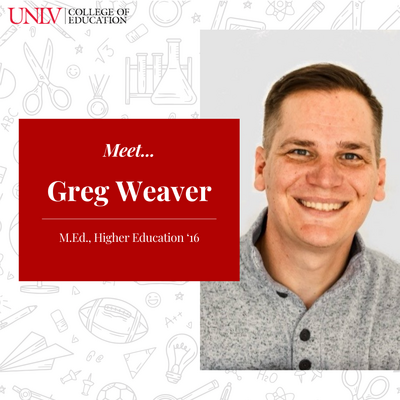
Why did you choose UNLV? What led you to pursue a degree in education? I really liked the higher ed program at UNLV and how it offered different concentrations to either study something specific or have the option to transition to different aspects of the program to get a field of it. The assistantship the university offered is what I felt really helped with this as well, I learned so many new skills
How did UNLV prepare you for your career? UNLV really helped me with strategic thinking and working with diverse populations. I also had the opportunity to teach at UNLV during my program which really helped me my career early on
Why should alumni stay engaged at UNLV?
It’s good to stay engaged at UNLV because you meet other alumni and people who are passionate about UNLV, its a great way to network with others.
Are you a COE alum? Let us know what you’ve got going on by submitting a Class Note or getting involved!
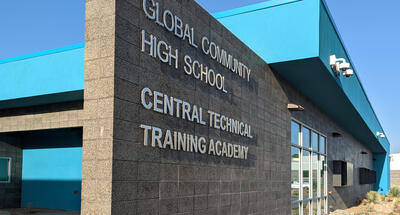
Two UNLV COE alumni Elena Fabunan, ’09 M.Ed. Educational Leadership, and Lilianna Bonderov, ’06 M.Ed. Curriculum & Instruction, ’09 M.Ed. Educational Leadership, have paired up to share a high school campus near downtown Las Vegas. In the new joint venture, the principals of Central Technical Training Academy and the Global Community High School are building the schools’ collective campus culture in the spirit of collaboration and partnership.
One Campus, Two Missions
Central Technical Training Academy is a vocational school offering various technical and trade programs, including electrical, plumbing, HVAC, and welding. Its programs provide hands-on training and prepare students for industry certifications and entry-level jobs. The academy shares its grounds with the Global Community High School is a small-scale high school of choice with a project-based learning and a multilingual approach to education for English language learners.
Despite their different approaches, both schools prepare students for college and career success by providing a culturally inclusive and supportive learning environment. This non-traditional approach to secondary education provides numerous opportunities for students who were likely to face delayed graduation in a traditional high school setting.
Central Tech’s programming features a uniquely flexible schedule allowing students the chance to make up credits. Global students are also afforded a path to graduation so long as they are under the age of 20 before commencement.
Sharing is Caring
While sharing the space comes with its challenges, Lilliana and Elena recognize the many practical advantages. The collective student body of more than 200 is expected to rapidly grow each year, and the shared campus cultivates a space where the two principals stretch the traditional systems and structures in place to increase student success.
“Just by the nature of our being on the same campus, we have a lot of opportunities to collaborate,” notes Lilianna, Central Tech’s principal. “Not only do we need to work together on operational aspects, like lunch, campus safety, and traffic, but we also have a chance to share resources and specialized knowledge.”
Sharing a high school campus is no easy feat, luckily it’s not the first time the pair have worked together. They were in the same UNLV graduate program cohort at UNLV and completed all of their coursework together. The two enjoy working together with their staff to overcome barriers to employment for the vulnerable student population they serve. For example, they jointly coordinate workforce presentations, career panels, job site tours, and provide access to the J4NG program, which helps students successfully transition from school into careers.
The benefits of UNLV’s commitment to community and industry partnership shine bright on this campus. It has equipped Elena and Liliana with a shared experience and set of values founded in their studies at UNLV’s College of Education.
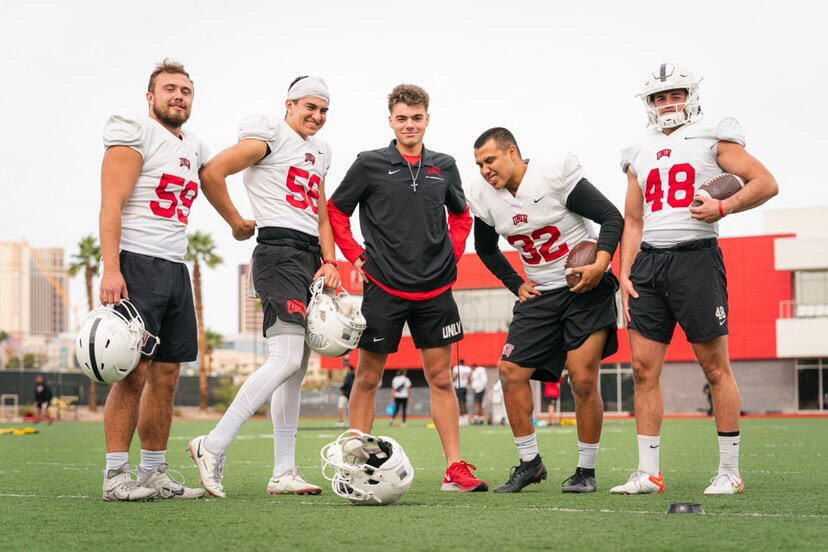
Learning what it means to be a great leader is never straightforward, but honing leadership skills in the face of adversity is critical to the process. Alex Chackel knows this all too well. His recent Special Teams Quality Control Internship with UNLV Football was truly a test of his ability to be a strong leader in the midst of a tumultuous season.
While the sophomore is pursuing his bachelor’s degree in a business entrepreneurship, he’s working to add a certificate in https://www.unlv.edu/ephe/sport-managementintercollegiate and professional sport management (IPSM), which is housed in the College of Education, to his academic credentials. Alex knows what it takes to find balance and maintain priorities while setting lofty goals for himself and his athletes. He’s sped his academic progress by enrolling in summer courses while juggling a full course load and traveling with UNLV Football. You may be wondering, where does he get the motivation to accomplish all of this? Well, it’s all in the family.
Alex’s parents were both NCAA student-athletes, with his mom playing tennis at the University of Washington and dad playing golf at both Oregon and Washington. In addition, his grandfather founded the University of Oregon Sports Network. Alex’s family fostered his love of sports, specifically collegiate athletics. He recalls attending events like the 2015 Rose Bowl, an event marked by his family’s love for the Oregon Ducks and a big victory over Florida State. It was only a matter of time that his academic and professional aspirations would reveal his desire to stay in the game. “I just wanted to take the next step to stay involved in sports since I could no longer play.” This is a sentiment shared by many IPSM students. There is a strong desire to bridge the gap between playing and transitioning to other roles in sport, a feeling Alex refers to as “wanting to get to the other side.”
That other side, in Alex’s case, is coaching, a niche that IPSM uniquely encourages in comparison to other programs. UNLV’s program is well rounded and provides students with educational experiences that will serve them well no matter which professional path they take. Hands-on work is a perfect addition to classroom learning, and Alex’s internship offered him the chance to apply what he has learned in the classroom in real-life coaching and leadership scenarios.
Through this, Alex is developing his own leadership style, one that centers around consistency, high energy and a positive mindset, regardless of the outcome on the field. In a season riddled with close losses, he experienced first hand the need to be firm, never lowering the bar for excellence, maintaining team standards and pushing the envelope every day, practice and game regardless of yesterday’s score. Alex strives to elevate the team through his own game-day responsibilities like assisting in coaching, self-scout grading, and coordinating the players, as well as preparing reports concerning the opposing teams and compiling practice and game-day film.
The valuable experiences he’s had so far in the IPSM program have only amplified his passion for a career in sport. “This program is something anyone hoping to join the sport industry should enroll in,” says Alex. “Without the program, I’d be missing a lot of learning opportunities. Watching how the coaches interact with the players and each other, paying attention to behind-the-scenes management, and taking in the overall picture has shown me what I am learning in class is truly applicable in my position.”