Originally posted: Aug. 31, 2022
By: COE Communications Staff
Mentors Connect with Students for STEAM Success
While the summer months are earmarked for relaxing vacations, Dr. Shaoan Zhang from the College of Education and Dr. Mei Yang from the College of Engineering spend their summers building bridges.
These were no ordinary bridges, though. These bridges connect educators and middle school girls who have aspirations to work in science, technology, engineering, arts and mathematics (STEAM) at the Engaging Girls in Ubiquitous Intelligence and Computing (GUIC) summer program.
Mentorship Matters
In addition to encouraging young women to pursue STEAM careers, the program is a testing and training ground for mentors and educators, helping them build skills to inspire their students in their classrooms in the next academic year.
While the teaching profession is female-dominated, careers in STEAM fields are predominantly held by men. This is a puzzling outcome as Dr. Yang and Dr. Zhang recognize the importance of female students seeing themselves represented during early introductions to the field and its various disciplines. Female students are aware of some of the outstanding contributions by women scientists and engineers and, from a young age, aspire to these careers. However, their interest tends to wane over time, especially as the complexity of science and math curricula increases. Drs. Yang and Zhang are identifying ways to support and encourage these students and are helping teachers learn how to nurture their curiosity through leader-centric preparation.
Embracing Diversity, Self Identification and Hands-on Learning
Education and engineering students, pre-service teachers and current educators who serve as mentors have been instrumental to the program’s success and positive student outcomes. “Most of our mentors are female and some of them are underrepresented minorities,” shares Dr. Yang. The selection of diverse mentors is intentional and enhances both collaboration and confidence amongst the students.
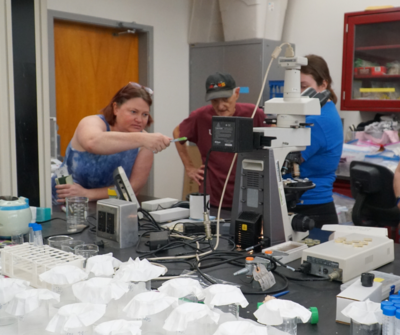
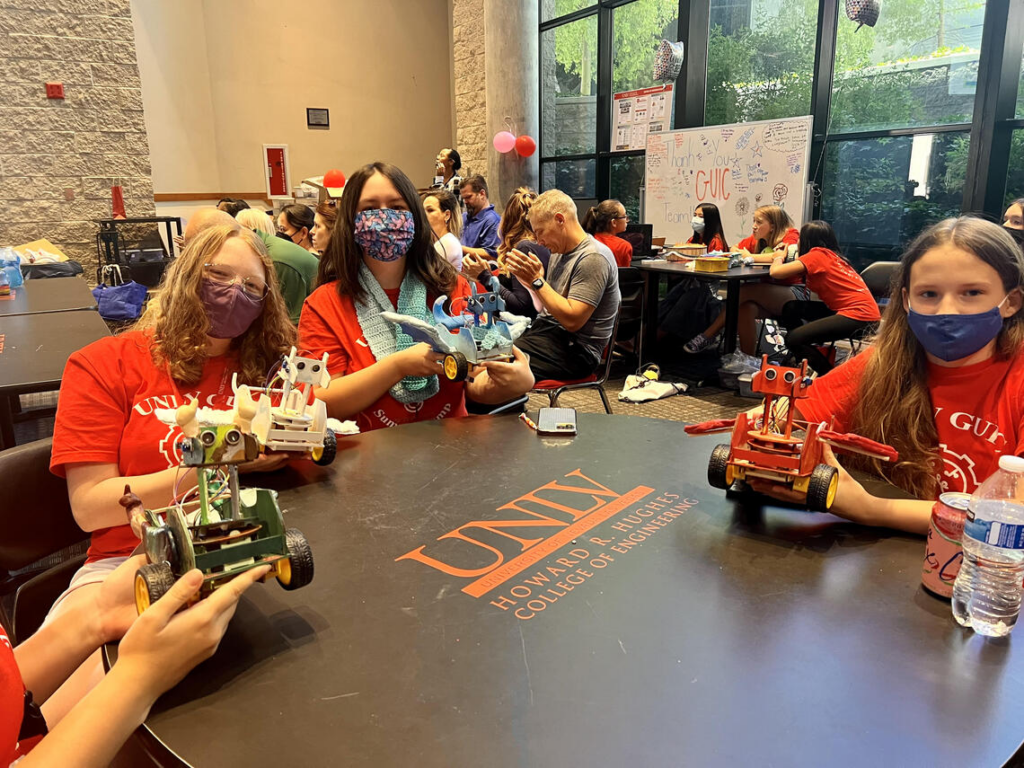
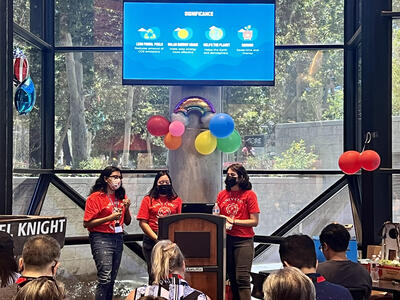
Before working with their mentees, the mentors go through a variety of workshops focused on leadership development, content concepts, and delivery as well as improved best practices for teaching in informal learning settings like the GUIC summer camp. During the program each mentor is then assigned to a group of up to 10 students and leads them through the various hands-on projects. It all came together in the last week when teams presented their final projects, which included a line and color tracking robot programmed to navigate mazes. Students defend their work and present real world applications for the technology and programs they worked on.
Beyond Camp
The lessons and inspiration extend well past the program’s scheduled end each summer. Student mentees are excited to return to school and have increased confidence in taking math and science courses that lead to a future in STEM. In addition to earning professional development credits, the mentors finish the summer with new approaches to science and engineering content for their classrooms.